
BY The Author: Asadullah Akbar Mughal (S/O M. Akbar Fateh) Founder: IORC-SPSS Holdings & VILTRON Industries Visionary Founder: IORC-SPSS Group of Holdings & Viltron Group of Industries Location: Lahore, Pakistan Contact: Call/WhatsApp: +92-324-4762964 | +92-312-8112366 Email: asadullah.akbar9696@gmail.com Professional Roles: Thought Leadership Strategist and Writer | Business Developer & Marketer | Process Optimiser | Sustainability Advocate | Engineer
Introduction of the SaaS Demand Generation vs Lead Generation
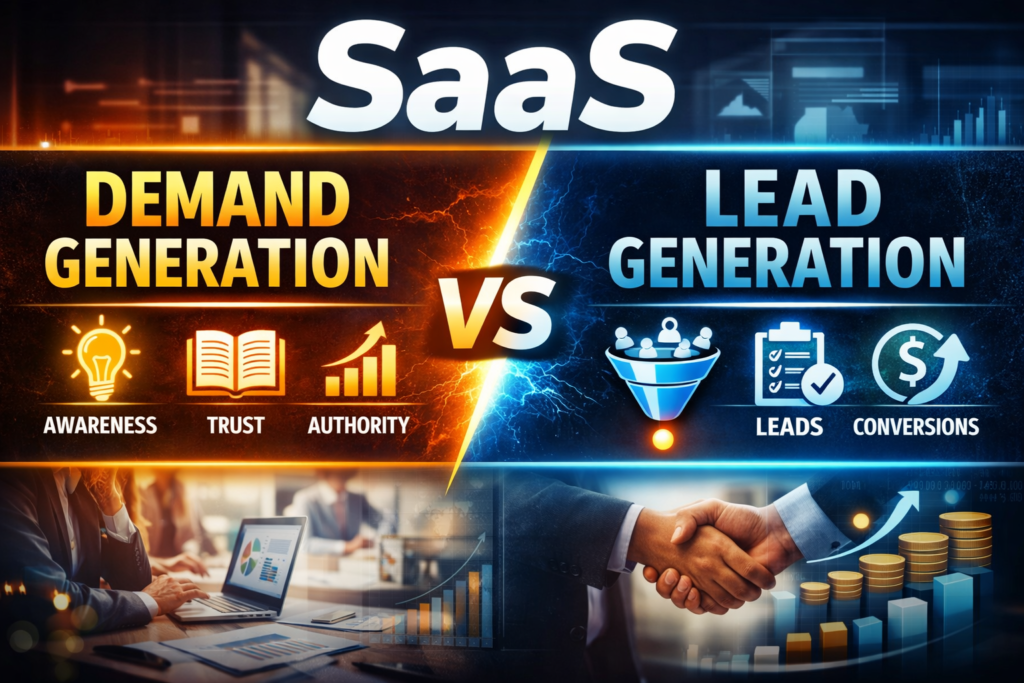
The title “SaaS Demand Generation vs Lead Generation” immediately frames a strategic comparison within the Software as a Service (SaaS) business model, in which software is delivered via a cloud-based subscription rather than a one-time purchase, such as a CRM platform billed monthly. “Demand” refers to market desire or interest for a solution, while the verb “Generation” signifies the active creation of that interest through education, awareness, and authority building—for example, publishing research to highlight an industry problem. “Lead” denotes an identifiable potential buyer, and “Generation” here means capturing that buyer’s information, such as through a demo request form. The term “vs” signals comparison, not conflict, encouraging analytical evaluation. Combined, the title defines the article’s scope: contrasting awareness-building strategies with conversion-focused tactics in SaaS growth. It clarifies the focus on revenue architecture and establishes the purpose—helping founders balance long-term demand creation with immediate pipeline acquisition.
Overview of the SaaS Demand Generation vs Lead Generation
The title “SaaS Demand Generation vs Lead Generation” signals a focused exploration of two foundational growth mechanisms within Software as a Service, a cloud-based subscription model where users access software online. “Demand” represents market appetite or interest for a solution, while “generation” implies the deliberate act of creating that interest through thought leadership, content marketing, or educational outreach—such as publishing an industry benchmark report. In contrast, a “lead” is a potential buyer whose identity is known, and “generation” in this context refers to capturing that prospect’s contact details via actions like filling out a pricing inquiry form. The word “vs” frames a structured comparison, encouraging strategic clarity rather than rivalry. Collectively, the title communicates that the article will examine how SaaS companies stimulate market awareness and convert that awareness into measurable sales opportunities, defining when and how each approach drives sustainable revenue growth.
1. Understanding SaaS in Today’s Digital Economy
Software as a Service (SaaS) is a cloud-based model where businesses access software online through a subscription instead of installing it locally. According to IBM, SaaS allows organisations to scale faster with lower infrastructure costs and flexible upgrades. In the modern digital economy, SaaS companies compete globally from day one. This makes marketing strategy extremely important. If a SaaS startup does not clearly position itself in the market, it struggles to survive. Sustainable SaaS growth depends on trust, visibility, and long-term customer relationships. Founders must understand that success is not only about product features but also about education, awareness, and engagement. Learn more about SaaS fundamentals from IBM’s official cloud guide: https://www.ibm.com/cloud/learn/saas
2. What is Demand Generation in SaaS?
Demand generation in SaaS focuses on building awareness and educating the market before a buyer is ready to purchase. It answers the question: “Why does this problem matter?” According to HubSpot, demand generation includes content marketing, webinars, research reports, and LinkedIn thought leadership. Instead of directly asking for a demo, companies first provide value. This approach builds authority and credibility in competitive industries. For example, publishing insights about SaaS metrics or growth strategies helps founders attract the right audience. Demand generation is long-term and brand-focused. It strengthens visibility and trust before sales conversations begin. Explore detailed insights on demand generation strategy here: https://blog.hubspot.com/marketing/demand-generation
3. What is Lead Generation in SaaS?
Lead generation is the process of capturing potential customers who have already shown interest. It converts website visitors or engaged audiences into measurable leads through forms, demo requests, or gated content. Salesforce explains that lead generation focuses on collecting contact information and moving prospects into the sales funnel. For example, running targeted ads for “best CRM software” is a direct lead generation tactic. Unlike demand generation, lead generation is short-term and conversion-driven. It measures success through metrics like conversion rate and pipeline value. However, without brand trust, these leads may not convert effectively. Learn more from Salesforce’s official resource: https://www.salesforce.com/resources/articles/lead-generation/
4. Key Differences Between Demand and Lead Generation
The main difference between SaaS demand generation and lead generation lies in timing and purpose. Demand generation creates interest; lead generation captures interest. Gartner research shows that modern B2B buyers complete most research before contacting sales. This means awareness must exist first. Demand generation builds brand recognition through educational content, while lead generation focuses on direct action, such as booking a demo. Both strategies are important, but they serve different stages of the buyer journey. Companies that ignore demand creation often face high acquisition costs. Read more insights from Gartner’s marketing research: https://www.gartner.com/en/marketing
5. Why SaaS Startups Confuse These Two Strategies
Many SaaS founders prioritise quick results and focus only on collecting leads. They invest heavily in paid ads without building brand authority. Content Marketing Institute highlights that businesses with strong educational content perform better in long-term growth. Without demand generation, lead generation becomes expensive and unstable. If customers do not recognise your brand, they hesitate to trust your solution. Sustainable SaaS marketing requires balance. Founders must create helpful content, build industry authority, and then convert that awareness into leads. Explore research-based insights here: https://contentmarketinginstitute.com/
6. The Role of Content Marketing in Demand Generation
Content marketing is the backbone of SaaS demand generation. Publishing blogs, LinkedIn articles, podcasts, and case studies positions your brand as an expert. Harvard Business Review explains that thought leadership influences buyer decisions significantly in B2B markets. When SaaS companies share valuable insights, they build trust before sales outreach begins. For example, writing about SaaS growth metrics or ethical marketing frameworks attracts decision-makers. Over time, consistent content improves organic reach and authority. This method aligns with sustainable and value-driven business practices. Learn more from Harvard Business Review’s marketing insights: https://hbr.org/topic/b2b-marketing
7. How SEO Supports Long-Term Demand Generation
Search Engine Optimisation (SEO) ensures your SaaS content reaches the right audience. By targeting keywords like “SaaS demand generation strategy” or “B2B lead generation framework,” companies increase visibility. Google provides clear guidelines on creating helpful, user-focused content that ranks well in search results. SEO-driven demand generation builds organic traffic that compounds over time. Unlike paid ads, organic visibility continues delivering results without constant spending. Founders should focus on high-quality blogs, technical optimisation, and user experience. Read Google’s official search guidance here: https://developers.google.com/search/docs
8. Paid Advertising and Lead Generation Efficiency
Paid campaigns are powerful tools for accelerating SaaS lead generation. Platforms such as Google Ads and LinkedIn Ads allow targeted outreach to decision-makers. WordStream explains that pay-per-click (PPC) campaigns perform better when supported by strong brand awareness. If prospects already recognise your brand through demand generation, paid ads convert more efficiently. However, relying only on ads increases Customer Acquisition Cost (CAC). Therefore, paid strategies should complement organic visibility. Balanced marketing investment improves financial sustainability. Learn more about PPC best practices here: https://www.wordstream.com/ppc
9. Metrics That Define Success in Both Strategies
Measuring performance correctly is essential for SaaS growth. Demand generation metrics include engagement rate, branded search growth, and audience reach. Lead generation metrics include conversion rate, Marketing Qualified Leads (MQLs), and Sales Qualified Leads (SQLs). OpenView shares valuable SaaS metrics frameworks for tracking growth effectively. Monitoring both awareness and pipeline indicators ensures balanced decision-making. Founders who focus only on demo numbers may ignore declining brand visibility. A structured analytics approach leads to predictable revenue. Explore SaaS metrics guidance here: https://openviewpartners.com/blog/saas-metrics/
10. Building a Balanced SaaS Growth Engine
The most successful SaaS companies integrate demand generation and lead generation into one unified revenue system. McKinsey & Company emphasises that digital strategy must combine brand building with performance marketing. Demand generation creates trust and authority, while lead generation converts that trust into measurable sales opportunities. Together, they reduce acquisition cost and improve lifetime customer value. Founders should develop a clear Ideal Customer Profile (ICP), invest in content, optimise SEO, and implement structured lead capture systems. Sustainable growth is not accidental; it is strategic. Learn more about digital growth frameworks here: https://www.mckinsey.com/capabilities/mckinsey-digital
11. The Importance of Ideal Customer Profile (ICP) Clarity
A strong SaaS demand generation vs lead generation strategy starts with a clearly defined Ideal Customer Profile (ICP). Without knowing whom you serve, marketing becomes guesswork. Forrester emphasises that customer-obsessed organisations grow faster because they deeply understand buyer needs and behaviours. When your ICP is clear, your demand generation content becomes more relevant, and your lead generation campaigns convert better. For example, a SaaS solution for fintech startups must specifically address compliance, scalability, and security concerns. This focus reduces wasted marketing spend and improves pipeline quality. Clear ICP alignment supports ethical marketing by solving real problems rather than promoting generic solutions. Learn more about customer-focused strategy here: https://www.forrester.com
12. Marketing and Sales Alignment for Revenue Growth
One of the biggest challenges in SaaS growth is misalignment between marketing and sales teams. Demand generation may create awareness, but if sales teams are not aligned, opportunities are lost. HubSpot explains the importance of shared definitions for MQLs and SQLs to improve conversion rates. When marketing understands what sales truly need, campaigns become more effective. Regular communication, shared dashboards, and joint planning sessions strengthen collaboration. In SaaS, revenue growth is a team effort, not a departmental competition. Alignment ensures that demand creation efforts translate into meaningful sales conversations. Explore revenue alignment insights here: https://blog.hubspot.com/sales/smarketing
13. The Role of CRM and Marketing Automation
Technology enables scalable execution of both demand and lead generation strategies. A modern CRM system tracks prospect interactions across multiple channels. Microsoft highlights how CRM platforms improve customer relationship management and data visibility. Marketing automation tools nurture leads with personalised email workflows and behaviour-based triggers. For example, if a prospect downloads a whitepaper, they can automatically receive relevant case studies. This structured system improves efficiency and reduces manual errors. For SaaS companies, investing in CRM and automation early creates operational discipline. Learn more about CRM fundamentals here: https://dynamics.microsoft.com/en-us/what-is-crm/
14. Account-Based Marketing (ABM) for Enterprise SaaS
For enterprise-level SaaS businesses, Account-Based Marketing (ABM) combines demand generation and lead generation effectively. ITSMA defines ABM as a strategic approach that targets high-value accounts with personalised campaigns. Instead of broad outreach, ABM focuses on specific companies and decision-makers. Demand generation builds awareness within the target organisation, while lead generation captures engagement from key stakeholders. This approach shortens sales cycles and increases deal size. ABM requires coordination between marketing and sales, but delivers strong ROI when executed properly. Explore ABM strategy insights here: https://www.itsma.com/page/what-is-abm
15. LinkedIn Thought Leadership as a Demand Engine
LinkedIn has become a powerful platform for SaaS founders and executives to build authority. LinkedIn provides marketing solutions that help professionals reach decision-makers globally. Consistent posting of insights, case studies, and industry analysis strengthens brand credibility. When prospects see regular, valuable content, they develop trust even before direct interaction. This organic visibility supports inbound demand generation. Over time, engagement from LinkedIn thought leadership translates into high-quality leads. The key is authenticity, clarity, and value-driven communication. Discover LinkedIn marketing opportunities here: https://business.linkedin.com/marketing-solutions
16. Ethical Marketing and Data Privacy Responsibility
In the digital age, ethical marketing practices are essential for long-term success. SaaS companies handle user data and must maintain transparency and responsibility. The United Nations promotes responsible innovation through its Sustainable Development Goals (SDGs), encouraging businesses to operate ethically. Demand generation rooted in education rather than manipulation builds sustainable trust. Lead generation strategies must comply with privacy regulations such as GDPR and respect user consent. Transparency strengthens brand reputation and reduces legal risks. Ethical SaaS marketing aligns profitability with positive social impact. Learn more about sustainable development principles here: https://sdgs.un.org/goals
17. Artificial Intelligence in Demand and Lead Optimisation
Artificial Intelligence (AI) is transforming SaaS marketing strategies. AI tools analyse behaviour patterns, predict buying intent, and personalise communication. World Economic Forum discusses how digital transformation is reshaping global industries. In demand generation, AI helps identify trending topics and optimise content performance. In lead generation, predictive scoring prioritises high-intent prospects for sales teams. However, technology must support human relationships rather than replace them. Responsible AI implementation enhances efficiency while maintaining authenticity. Explore digital transformation insights here: https://www.weforum.org/agenda/archive/digital-economy/
18. Reducing Customer Acquisition Cost (CAC) Sustainably
Balancing demand and lead generation directly impacts Customer Acquisition Cost (CAC). When brand awareness is strong, paid campaigns convert more efficiently, lowering acquisition expenses. OpenView explains how SaaS companies can track CAC alongside Lifetime Value (LTV) for sustainable scaling. Demand generation reduces dependency on expensive paid ads, while structured lead management improves conversion efficiency. Together, they create a financially healthy growth model. Monitoring CAC regularly ensures profitability and investor confidence. Learn more about SaaS financial metrics here: https://openviewpartners.com/blog/saas-metrics/
19. Revenue Operations (RevOps) for Predictable Growth
Revenue Operations (RevOps) integrates marketing, sales, and customer success into one unified system. McKinsey & Company highlights that integrated digital strategies outperform isolated tactics. In SaaS, RevOps ensures that demand insights, lead data, and customer feedback are connected. This alignment improves forecasting accuracy and pipeline transparency. When departments share common KPIs, decision-making becomes more strategic. RevOps transforms scattered efforts into predictable revenue generation. Discover more about digital revenue transformation here: https://www.mckinsey.com/capabilities/mckinsey-digital
20. Building Long-Term Authority in Competitive SaaS Markets
In highly competitive SaaS markets, long-term authority differentiates successful brands from short-lived startups. Harvard Business Review explains that consistent thought leadership builds trust and market influence over time. Demand generation strengthens brand perception, while lead generation activates revenue opportunities. Companies that invest in education, transparency, and customer value create loyal communities around their products. Sustainable SaaS growth is not about aggressive selling; it is about strategic positioning and meaningful engagement. Continuous learning, ethical leadership, and innovation ensure relevance in evolving markets. Read more about B2B growth insights here: https://hbr.org/topic/b2b-marketing
Conclusion: Integrating Demand and Lead Generation for Sustainable SaaS Growth
In the evolving SaaS landscape, the discussion of SaaS demand generation vs lead generation is not about choosing one over the other. It is about building a balanced, ethical, and performance-driven growth system. Demand generation creates awareness, trust, and long-term authority. Lead generation converts that trust into a measurable pipeline and revenue. According to insights from McKinsey & Company, companies that integrate brand building with performance marketing achieve stronger and more predictable digital growth. When SaaS founders align content strategy, SEO, paid campaigns, CRM systems, and sales processes, they reduce Customer Acquisition Cost (CAC) and improve Lifetime Value (LTV). Sustainable success requires patience, clarity of vision, and value-first communication. Businesses that focus on education, transparency, and customer-centric innovation build not just revenue, but long-term impact in the global digital economy.
About the Author
Asadullah Akbar Mughal (S/O M. Akbar Fateh) is a growth strategist, business developer, and sustainability-focused thought leader. As Founder of IORC-SPSS Holdings & VILTRON Industries, he writes about SaaS growth strategy, ethical marketing, digital transformation, and long-term business scalability.
Author’s Comment
By Asadullah Akbar Mughal (S/O Muhammad Akbar Fateh)
This article reflects my professional perspective on one of the most misunderstood topics in modern SaaS growth — Demand Generation vs Lead Generation. In my experience working with founders, startups, and growth-focused organisations, I have observed that many businesses rush towards quick lead collection without building long-term market trust.
My intention in writing this piece is to highlight the importance of strategic balance. Sustainable growth does not come from aggressive selling alone. It comes from education, credibility, structured systems, and ethical engagement. Demand generation builds authority. Lead generation activates revenue. Together, they create predictable and responsible growth.
I strongly believe that businesses which align marketing, sales, technology, and sustainability principles will not only scale financially but also create meaningful impact in the digital economy.