
Introduction
In a digital-first economy, a strong online presence is the lifeblood of local service providers, especially for plumbing companies.
When a homeowner faces a burst pipe at 2 AM or a backed-up sewer line during a family gathering, their first move is almost always a quick search on their smartphone.
This immediate, high-intent need for local solutions makes citation building a cornerstone of modern business growth.
Citations are digital mentions of your business’s Name, Address, and Phone number (NAP) across the web.
They act as trust signals that help search engines like Google verify your business’s legitimacy and location, directly impacting your local search engine optimization (SEO) performance.
For plumbing professionals, effective citation building isn’t just about “getting listed”it’s about dominating the local market.
In an era where AI-driven search and voice assistants are becoming the norm, the accuracy of your digital footprint is more critical than ever.
This guide provides a comprehensive roadmap for building, managing, and optimizing your citations to ensure your plumbing business stays at the top of local search results.
What Are Local Citations?
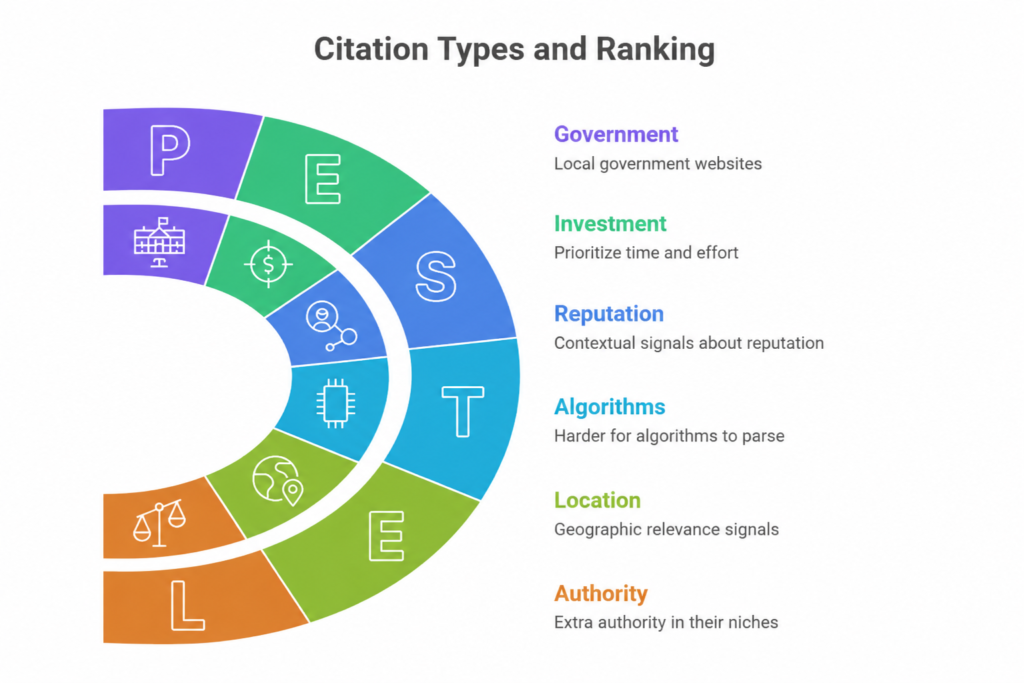
Local citations are any online mentions of your business’s core information (NAP). These can appear on diverse platforms, from major business directories and social media sites to local news outlets and industry-specific blogs. Think of each citation as a digital vote of confidence that confirms your business exists at a specific location and offers specific services. As noted by BrightLocal, these mentions are essential for establishing a credible digital footprint that search engines can rely on when generating results for local users.
There are two primary categories of local citations that every plumber should understand:
Structured Citations
These are the most common and appear on formal business directories where the data is organized into specific fields. Examples include Yelp, Yellow Pages, and industry-specific platforms like HomeAdvisor. The information is presented in a standardized format, making it exceptionally easy for search engines to crawl, index, and verify.
Unstructured Citations
These occur when your business details are mentioned less formally, such as in a local news story, a community blog post, or a social media update. While they lack the rigid structure of a directory listing, these citations add significant weight to your overall online authority. A mention in a local newspaper’s “Best of” list, for instance, is a powerful unstructured citation that signals high community trust.
Why Citation Building Matters for Plumbers

For plumbing companies, the value of citation building extends far beyond simple visibility. It is a fundamental strategy for building trust and securing high-intent leads in your specific service area.
Improves Local Visibility and Reach
When a potential customer searches for “emergency plumber near me,” search engines analyze hundreds of signals to deliver the most relevant results. Consistent and widespread citations are among the most influential signals. According to Sterling Sky, maintaining accurate citations remains a vital practice for service-based businesses looking to maintain their edge in an increasingly AI-driven search landscape. The more places your business is correctly mentioned, the “larger” your digital footprint appears to Google, which often leads to higher rankings.
Builds Trust and Authority in a High-Stakes Industry
Trust is the most valuable currency in the plumbing industry. Customers need to know that the technician entering their home is from a legitimate, professional business. Consistent citations across reputable platforms like the Better Business Bureau or local Chambers of Commerce signal to both search engines and customers that your business is established and reliable. As highlighted by Atomic Social, even AI search platforms now use citation consistency as a primary trust signal for local service providers. If your information is different on every site, it creates a “red flag” that can lead to lost leads.
Helps Rank in the Coveted Google Map Pack
The Google Map Pack is the “gold mine” of local SEO. It displays the top three local businesses for a given search, complete with contact info, ratings, and map locations. Research from Rival Digital confirms that citations are a critical ranking factor for the Map Pack. Google uses the frequency and accuracy of your citations to verify your service area. If your citations consistently point to a specific city, Google becomes more confident in showing your business to users in that exact location.
Key Elements of a High-Quality Citation
To maximize the impact of your citation strategy, you must focus on the core components that search engines prioritize. It’s not just about the quantity of listings, but the quality and accuracy of the data within them.
NAP (Name, Address, Phone Number) Consistency
Consistency is the “golden rule” of citation building. Your business’s Name, Address, and Phone number (NAP) must be identical across every single platform. Discrepancies as small as using “St.” on one site and “Street” on another, or “Plumbing Pros” vs. “Plumbing Pros LLC,” can confuse search algorithms. When Google encounters conflicting data, it loses confidence in your business’s location, which can weaken your local authority. This principle is emphasized in the 2026 Guide to Local SEO as the most foundational element of local success.
Business Categories and Service Tags
Selecting the correct categories on directories is vital for being found by the right audience. For a plumber, this means using specific tags like “Emergency Plumbing,” “Drain Cleaning,” “Water Heater Repair,” or “Sewer Line Services.” Accurate categorization ensures that search engines match your business with high-intent queries. If you are a specialist in commercial plumbing but only list yourself under “General Contractor,” you are missing out on targeted leads.
Website URL and Deep Linking
Always include your official website URL in every citation. This not only provides a direct path for customers to book your services but also creates a valuable backlink that strengthens your overall SEO. For plumbers with multiple locations, “deep linking” to specific location pages (e.g., yoursite.com/plumber-houston) on local directories can provide an even stronger geographical signal to search engines.
Top Citation Sites for Plumbers: Where to Start
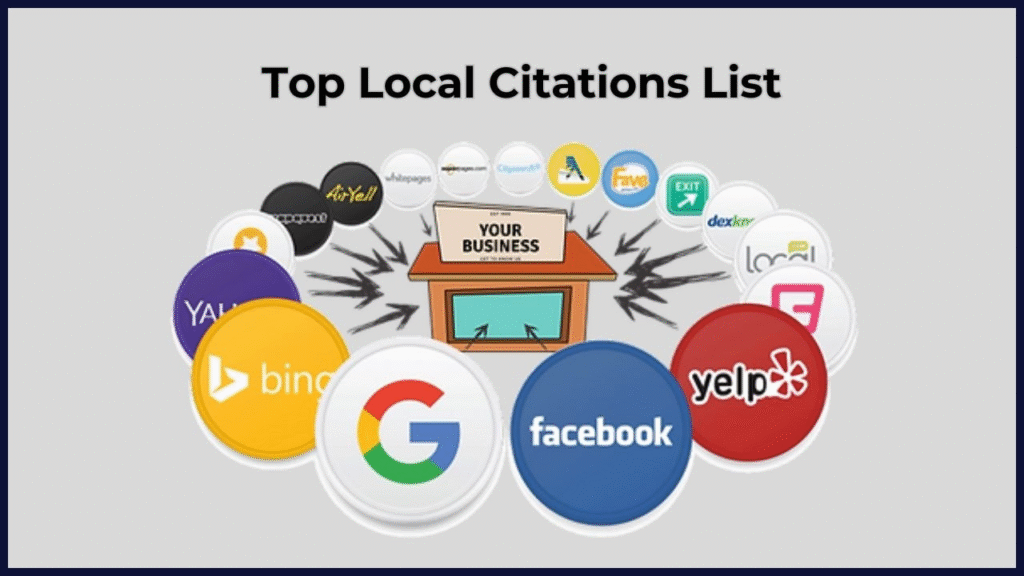
Focusing your efforts on high-authority platforms will yield the best return on investment. Here are the most critical sites for plumbing companies, ranked by their general importance in the local SEO ecosystem:
Google Business Profile (GBP)
The single most important citation. A fully optimized GBP is non-negotiable for local ranking. It serves as the “source of truth” for most other directories.
Yelp
A powerhouse for local reviews and a major source of leads for home service professionals. Yelp’s data is also used by Apple Maps, making it doubly important.
Bing Places for Business
Essential for capturing traffic from users on Microsoft’s ecosystem, including those using Alexa-enabled devices.
A vital social citation source that also serves as a platform for community engagement and real-time customer reviews.
Industry-Specific Directories
Platforms like Angi, HomeAdvisor, and Thumbtack are designed specifically for service providers. These sites carry immense weight in the plumbing niche because they are trusted by homeowners for vetting contractors.
Step-by-Step Guide to Building and Managing Citations
Building a strong citation profile is a marathon, not a sprint. Follow these steps to ensure your plumbing business is correctly and comprehensively represented across the web.
Audit Your Existing Digital Footprint
Start by identifying where your business is currently listed. Use tools like Whitespark or manual Google searches to find every mention of your NAP. Look for old phone numbers from previous owners, old office addresses, or slight variations in your business name. An audit is the first step in reclaiming control over your digital identity and identifying the “noise” that might be hurting your rankings.
Fix Inconsistencies and Clean Up Data
Once you have your list, systematically update every incorrect listing. Prioritize major platforms like Google and Yelp first, then move to smaller, local directories. This process ensures that search engines receive a clear, unified signal about your business’s location and contact details. If you find listings for your business at an address you haven’t used in five years, getting those updated is a top priority.
Submit to Top National and Local Directories
After fixing existing listings, begin submitting your business to high-authority directories you may have missed. Ensure every profile is 100% complete. This includes:
•High-quality photos of your team, branded vans, and completed projects.
•Accurate and updated business hours (especially if you offer 24/7 emergency service).
•A detailed, keyword-rich description of your services (e.g., “Expert leak detection and pipe repair in [City Name]”).
Leverage Hyper-Local and Niche Directories
Don’t ignore the “small” players. Local directories run by your city’s Chamber of Commerce, neighborhood associations, or community news portals provide hyper-local relevance. Niche sites dedicated exclusively to plumbing or home improvement also carry high value. These are often the “secret sauce” that helps a small local business outrank a larger national franchise in a specific zip code.
Common Mistakes to Avoid in Citation Building
Avoiding these frequent errors will keep your citation strategy on track and prevent potential ranking penalties from search engines.
- Inconsistent NAP Data: As noted in Women Conquer Biz’s 2026 Guide, inconsistent data is the #1 reason for local ranking drops. If Google sees three different phone numbers for you, it doesn’t know which one to show, so it might not show any.
- Duplicate Listings on the Same Platform: Having multiple profiles on Yelp or Google Business Profile confuses both customers and search algorithms. It splits your “ranking power” between two listings instead of focusing it on one. Always merge or delete duplicates.
- Using Tracking Numbers in Citations: While great for marketing, using different tracking phone numbers on different directories can destroy your NAP consistency. Always use your primary, local business number for citations.
- Listing on Low-Quality or Spammy Directories: Avoid “link farms” or directories that look unprofessional. Focus on reputable sites that actually provide value to users. High-quality citations are worth 100x more than low-quality ones.
Advanced Strategies for Local Dominance
To stay ahead of the competition in 2026 and beyond, consider these professional-level strategies that go beyond basic directory submissions.
Utilize Data Aggregators for Widespread Coverage
Data aggregators like Data Axle and Neustar Localeze are massive databases that distribute business info to thousands of smaller sites, GPS systems, and mobile apps automatically. By ensuring your data is correct with these major players, you ensure widespread coverage without having to manually submit to every tiny website on the internet.
Rich Content: Photos, Videos, and Reviews
Rich content makes your listings more attractive to both humans and search engines. According to Seoprofy, listings with photos and active review management see significantly higher engagement rates. For plumbers, photos of a clean workspace and a professional uniform can be the deciding factor for a customer.
Optimizing for the Voice and AI Search Era
With over 50% of searches now being voice-activated through devices like Alexa, Siri, and Google Assistant, the accuracy of your citations is more critical than ever. Voice assistants pull their data from these directories. If your Yelp listing has the wrong hours, a voice search for “open plumbers near me” might exclude you. As The Stacc points out, 76% of voice searches have local intent. Ensure your descriptions use natural, conversational language that matches how people speak (e.g., “Who is the best plumber for a leaky faucet in [City]?”).
Recommended Tools for Citation Management
Managing hundreds of listings manually is nearly impossible for a busy plumbing business owner. These tools can help you automate and track the process:
- BrightLocal: The industry standard for auditing and manual citation building. It provides excellent reports on where your competitors are listed.
- Moz Local: Best for large-scale management of listings and distributing data to the major aggregators.
- Whitespark: Specialized in finding those hard-to-find niche and local citation opportunities that your competitors are likely missing.
Conclusion
Citation building for plumbers is no longer just an optional SEO tactic; it is a fundamental requirement for business survival in a local, mobile-first market. Your digital footprint is often the first interaction a customer has with your brand. By ensuring your NAP is consistent, leveraging high-authority and industry-specific directories, and staying active with rich content and reviews, you build a digital presence that search engines trust and customers choose.The local search landscape is constantly evolving, with AI and voice search playing larger roles every day. However, the foundation remains the same: accurate, verified, and widespread business information. Start auditing your citations today and lay the foundation for long-term local dominance. For more insights on the future of search, resources like BrightLocal’s AI Search Guide offer valuable foresight into how your digital listings will continue to power discovery for years to come. Don’t let a competitor with a better citation profile take your leads claim your place at the top of the search results today.