
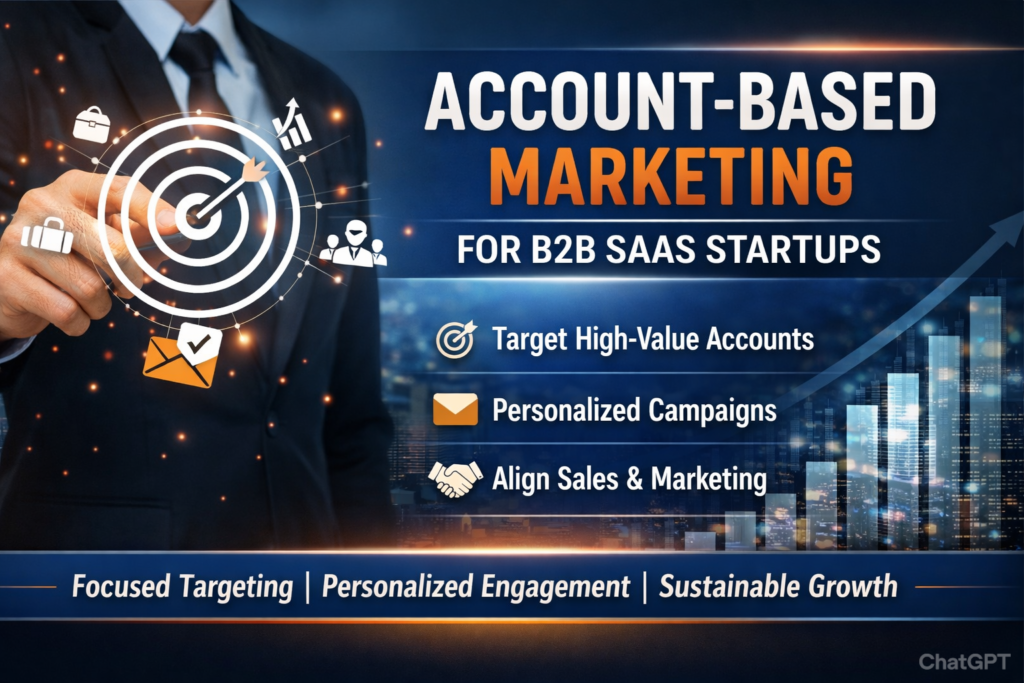
Account-Based Marketing for B2B SaaS Startups
BY
The Author: Name: Asadullah Akbar Mughal (S/O M. Akbar Fateh) | Founder: IORC-SPSS Holdings & VILTRON Industries | Visionary Founder: IORC-SPSS Group of Holdings & Viltron Group of Industries | Location: Lahore, Pakistan | Contact: Call/WhatsApp: +92-324-4762964 | +92-312-8112366 | Email: asadullah.akbar9696@gmail.com | Professional Roles: Thought Leadership Strategist and Writer | Business Developer & Marketer | Process Optimiser | Sustainability Advocate | Engineer
Introduction of Account-Based Marketing for B2B SaaS Startups
The phrase “Account-Based Marketing for B2B SaaS Startups” conveys a precise, high-value marketing strategy. “Account” refers to a specific business or organisation targeted for engagement, while “Based” emphasises that marketing efforts revolve around these identified accounts rather than a broad audience. “Marketing” refers to the planned set of activities designed to attract, engage, and convert prospects, including campaigns, emails, and personalised content. “B2B” refers to a business-to-business context, where companies sell solutions directly to other businesses, rather than to consumers. “SaaS” defines the industry focus on software-as-a-service products, such as cloud-based CRMs or project management tools. “Startups” highlights emerging companies with growth potential and limited initial reach. Collectively, the title frames the article’s scope and purpose: to guide SaaS startups in creating tailored, account-specific marketing strategies, optimising sales cycles, and building meaningful client relationships. For example, a SaaS CRM startup may design a custom demo campaign for a Fortune 500 client to illustrate this approach.
Overview of Account-Based Marketing for B2B SaaS Startups
Account-Based Marketing for B2B SaaS Startups represents a focused strategy to engage high-value clients effectively. Each word carries weight: “Account” denotes the targeted business entity, such as a company or enterprise; “Based” indicates that marketing initiatives are centred around these accounts. “Marketing” encompasses the campaigns, content, and communications used to attract and convert clients. “B2B” emphasises a business-to-business setting, highlighting company-to-company transactions. “SaaS” contextualises the discussion within cloud-based software solutions, like CRMs, automation platforms, or analytics tools. “Startups” specifies young, emerging companies seeking scalable growth. Taken together, the title signals that the article will provide actionable insights for SaaS startups to implement account-specific marketing strategies, build strong relationships with decision-makers, and accelerate revenue. For instance, a startup may identify a shortlist of 10 target accounts and craft customised emails, LinkedIn campaigns, and demos, illustrating how each element of the title informs the article’s purpose and scope.
1. Understanding Account-Based Marketing (ABM)
Account-Based Marketing (ABM) is not just a buzzword; it is a strategic methodology where marketing and sales work together to engage specific, high-value clients. Unlike broad marketing approaches, ABM focuses on tailoring messages, campaigns, and offers to a defined set of accounts. This method allows SaaS startups to allocate resources efficiently and create higher engagement. ABM also promotes personalised communications, which build trust and long-term relationships. For a practical guide, HubSpot provides insights into ABM strategy implementation that align with ethical business practices and sustainability values, offering examples for SaaS startups seeking growth.
2. Why ABM is Essential for B2B SaaS Startups
B2B SaaS startups often operate with limited marketing budgets and small sales teams. ABM enables them to focus on high-value accounts, increasing the efficiency of campaigns and shortening the sales cycle. By targeting companies most likely to convert, startups save resources while generating significant ROI. ABM also supports relationship-driven growth, which is vital for SaaS businesses where trust and credibility matter. Salesforce shares best practices for B2B SaaS ABM campaigns, demonstrating ethical engagement and long-term value creation for clients.
3. Defining the Ideal Customer Profile (ICP)
Central to ABM is defining an Ideal Customer Profile (ICP). The ICP describes the characteristics of a business most likely to benefit from a startup’s SaaS offering. Criteria may include company size, industry, technology stack, and revenue potential. Startups can use ICP to focus their ABM campaigns, ensuring every marketing effort targets the right audience. For example, a SaaS project management tool may prioritise mid-sized IT firms with distributed teams. A clear ICP definition improves efficiency and conversion rates. Practical guidance for developing ICP can be found at Demandbase’s ICP resources, aligning with ethical, sustainable targeting principles.
4. Mapping Target Accounts for ABM Success
Once the ICP is defined, the next step is creating a Target Account List (TAL). This list identifies companies that match the ICP and represent the highest potential for revenue growth. Startups can segment accounts by industry, revenue size, location, or product usage patterns. Effective account mapping ensures that marketing campaigns are personalised and relevant. LinkedIn’s Target Account Insights provides tools for ethical, data-driven targeting that respects privacy and encourages meaningful engagement.
5. Crafting Personalised Messaging for High-Value Accounts
ABM thrives on personalised communication. Standardised messaging often fails to resonate with decision-makers in targeted accounts. Personalisation can include customised emails, case studies, content recommendations, or product demos tailored to the account’s unique challenges. Personalised engagement improves response rates and builds credibility. For example, a SaaS startup can create content addressing the pain points of a fintech company seeking compliance management solutions. HubSpot’s ABM personalisation strategies provide guidance that balances effectiveness with ethical considerations.
6. Integrating Marketing and Sales Efforts
ABM succeeds when marketing and sales work in alignment. Sales teams provide insights on target accounts, while marketing develops campaigns and content to nurture leads. Regular collaboration ensures messaging is consistent, personalised, and resonates with decision-makers. This integration reduces resource waste and accelerates deal closure. Tools like Salesforce CRM facilitate ethical, data-driven ABM collaboration.
7. Leveraging Multi-Channel Outreach
High-value accounts often engage across multiple channels. ABM campaigns should include emails, LinkedIn messages, webinars, blogs, and targeted content. Multi-channel engagement ensures visibility and reinforces trust. For example, a SaaS cybersecurity startup might combine educational LinkedIn posts with personalised email campaigns and webinar invitations. For practical strategies, Demandbase provides multi-channel ABM guidelines that are reader-friendly, ethical, and sustainability-focused.
8. Measuring ABM Performance with Key Metrics
Measuring the success of ABM campaigns is critical. Metrics include engagement rates, meetings booked, conversion rate, and pipeline velocity. SaaS startups should track these metrics to optimise future campaigns and resource allocation. Tools like HubSpot and Salesforce allow ethical, data-driven reporting while protecting user privacy. For example, tracking demo requests and email opens provides insights into which campaigns resonate with target accounts. HubSpot’s ABM performance metrics explain how to measure outcomes ethically and sustainably.
9. Personalisation at Scale for SaaS Startups
Scaling personalisation is a challenge for growing startups. ABM tools like LinkedIn Matched Audiences and HubSpot’s marketing automation allow startups to personalise at scale without losing the human touch. Content templates, automated workflows, and dynamic email content can be tailored for each account efficiently. For example, automated campaigns can adjust messaging based on account engagement, ensuring relevance.
10. Aligning ABM with Sustainable and Ethical Practices
Ethical and sustainability-focused ABM is essential in today’s business environment. Startups should respect privacy, avoid spammy outreach, and create content that delivers genuine value. Campaigns should also reflect corporate social responsibility and sustainability, demonstrating ethical leadership. For instance, a SaaS company offering project management software could highlight its platform’s efficiency benefits that reduce paper usage, energy consumption, and carbon footprint. Resources such as Ethical Marketing Guidelines provide frameworks for creating campaigns aligned with Islamic ethical values and humanity-focused principles.
11. Leveraging Customer Insights for Account-Based Marketing
Understanding your target accounts requires deep insights into their business priorities, challenges, and decision-making processes. SaaS startups can use customer data to personalise campaigns effectively, ensuring that content resonates with key stakeholders. For example, analytics on account engagement and website behaviour can guide the creation of tailored email campaigns or whitepapers. By leveraging tools like Google Analytics 4, startups can ethically gather actionable insights while maintaining privacy standards. These insights allow marketers to anticipate client needs, refine messaging, and improve conversion rates. Additionally, aligning insights with sustainability goals—for instance, promoting eco-efficient software solutions—demonstrates responsibility and strengthens client relationships. Ethical and targeted use of data in ABM ensures that startups not only achieve business growth but also reinforce credibility and trust among high-value clients.
12. Content Marketing Strategies in ABM
Content is the backbone of ABM campaigns. Personalised, account-specific content—like blog posts, case studies, and whitepapers—can engage target accounts effectively. SaaS startups should focus on solving real pain points for each account. For instance, a startup offering collaboration software can create case studies for different industries showing efficiency improvements. HubSpot’s content marketing guide provides a practical framework for creating ethical, high-value content for ABM campaigns. By delivering meaningful, sustainability-aligned content, startups build trust, increase engagement, and position themselves as thought leaders. Ethical content marketing also enhances the startup’s reputation, reinforcing a commitment to human-centric solutions, corporate responsibility, and long-term relationships with key accounts.
13. Using LinkedIn for Account-Based Marketing Outreach
LinkedIn is an essential platform for B2B ABM due to its professional targeting capabilities. SaaS startups can engage decision-makers by sharing personalised content, commenting on posts, and connecting via InMail. For example, sending a case study directly to a target account’s marketing manager can improve engagement rates significantly. LinkedIn provides Target Account Insights for identifying high-value accounts ethically. This approach ensures that communication is relevant, respectful, and sustainable, avoiding spammy practices. By integrating LinkedIn into ABM campaigns, startups can reach multiple stakeholders within a single account while maintaining ethical standards, supporting sustainable business growth, and building credibility through professional networking.
14. Automating ABM Campaigns for Efficiency
Automation allows SaaS startups to scale ABM campaigns without losing personalisation. Email sequences, dynamic content, and workflow automation can engage multiple accounts efficiently. Tools like HubSpot and Salesforce provide marketing automation solutions that help ethically manage campaigns and track engagement metrics. For instance, automated workflows can trigger personalised emails when a target account downloads a whitepaper or attends a webinar. This ensures timely follow-ups and maintains relevance. Automation in ABM improves efficiency, reduces manual workload, and supports data-driven decision-making while adhering to privacy and ethical standards. Startups that leverage automation can deliver consistent, high-value communication to target accounts, driving higher conversion rates and long-term relationships.
15. Account Segmentation for Effective Targeting
Segmentation is a critical element of ABM. Not all target accounts are identical, and SaaS startups must prioritise based on revenue potential, industry, size, or strategic fit. Segmented campaigns allow more precise messaging and resource allocation. For example, mid-sized tech firms may receive content highlighting collaboration features, while larger enterprises focus on scalability. Demandbase’s account segmentation guide offers practical frameworks for ethical and data-driven segmentation. By using segmentation, startups can ensure relevance, improve engagement, and optimise conversion rates. Ethically executed segmentation also ensures sustainability by allocating resources to high-potential accounts instead of wasting energy on low-value targets.
16. Implementing Multi-Touch Campaigns
Multi-touch campaigns involve engaging target accounts across various channels over time. SaaS startups can combine emails, social media, webinars, and personalised landing pages to reinforce messaging. For instance, a SaaS analytics platform could send an email, host a webinar, and post relevant content on LinkedIn to a single account. HubSpot’s multi-touch ABM strategies provide guidance on managing campaigns ethically and effectively. This approach ensures that accounts experience consistent communication without spam, building trust and demonstrating sustainable, human-centric engagement. Multi-touch campaigns increase conversion potential and position startups as credible, ethical, and client-focused solution providers.
17. Engaging Stakeholders Across the Buying Committee
High-value accounts often have multiple decision-makers involved in purchasing. ABM requires engaging all relevant stakeholders, including managers, directors, and executives. SaaS startups can personalise messaging for each role. For example, technical teams may need feature-focused content, while executives prefer ROI-centric case studies. Salesforce provides ABM stakeholder engagement best practices to ethically reach multiple decision-makers. This ensures that every key player receives relevant, value-driven communication. Engaging the full buying committee improves conversion rates, builds trust, and ensures that campaigns respect ethical communication standards while supporting sustainable business growth.
18. Measuring Engagement Across Channels
Tracking engagement across multiple channels is essential for ABM success. Metrics like email opens, webinar attendance, content downloads, and LinkedIn interactions provide actionable insights. HubSpot’s ABM analytics guide explains how to measure engagement ethically and sustainably. For example, analysing which accounts clicked on case studies helps refine future campaigns. By monitoring these metrics, startups can optimise resource allocation, improve content relevance, and enhance ROI. Ethical measurement practices ensure privacy protection while supporting client-centric and sustainable marketing approaches.
19. Aligning ABM With Corporate Sustainability Goals
Modern SaaS startups must integrate sustainability into ABM campaigns. Highlighting energy-efficient software solutions, cloud optimisations, or process improvements can demonstrate commitment to environmental responsibility. For guidance on ethical and sustainable marketing, Ethical Marketing Guidelines provide frameworks for campaigns aligned with Islamic values and humanity-centred business practices. Startups can show clients that adopting their SaaS solution supports not only business efficiency but also corporate responsibility, increasing trust, engagement, and long-term loyalty.
20. Using ABM to Build Long-Term Customer Relationships
ABM is not only about immediate conversions; it focuses on long-term account engagement and retention. By continuously providing value, personalised content, and support, SaaS startups can build strong relationships with high-value accounts. For example, sending quarterly updates, industry insights, and educational content keeps clients engaged. HubSpot’s customer retention strategies explain ethical ways to nurture accounts sustainably. Long-term engagement strengthens trust, demonstrates credibility, and supports sustainable growth, aligning ABM with both business goals and ethical practices.
Conclusion
Account-Based Marketing (ABM) offers SaaS startups a strategic, high-impact approach to growth, focusing on personalised engagement with high-value accounts. By defining an Ideal Customer Profile, mapping target accounts, and delivering tailored content across multiple channels, startups can maximise efficiency, optimise sales cycles, and build meaningful relationships. Integrating marketing and sales efforts, leveraging automation, and measuring engagement ensure campaigns are both effective and sustainable. ABM also aligns with ethical business practices by respecting privacy, prioritising value-driven communication, and supporting corporate sustainability goals. Startups that implement ABM with thoughtfulness, consistency, and ethical consideration position themselves as trusted, credible, and innovative partners for their clients. Ultimately, ABM is more than a marketing tactic—it is a framework for building long-term growth, nurturing relationships, and creating a sustainable, human-centric business ecosystem in the competitive B2B SaaS landscape.
The Author: Name: Asadullah Akbar Mughal (S/O M. Akbar Fateh) | Founder: IORC-SPSS Holdings & VILTRON Industries | Visionary Founder: IORC-SPSS Group of Holdings & Viltron Group of Industries | Location: Lahore, Pakistan | Contact: Call/WhatsApp: +92-324-4762964 | +92-312-8112366 | Email: asadullah.akbar9696@gmail.com | Professional Roles: Thought Leadership Strategist and Writer | Business Developer & Marketer | Process Optimiser | Sustainability Advocate | Engineer
As the author, I emphasise that Account-Based Marketing (ABM) is not just a tactical approach, but a mindset for strategic growth in B2B SaaS startups. The insights shared in this article are based on real-world practices, blending practical marketing strategies, ethical engagement, and sustainability-driven thinking.
I encourage founders, business development managers, and growth leads to view ABM as a framework for personalised, high-value engagement rather than a series of isolated campaigns. By focusing on the right accounts, crafting tailored messaging, and aligning marketing with sales, startups can achieve measurable ROI while building trust and credibility with key stakeholders.
The strategies highlighted here are scalable, actionable, and adaptable, making them suitable for both emerging startups and established SaaS businesses. Ethical, human-centric, and sustainability-aligned execution ensures that growth is responsible, long-term, and impactful.