
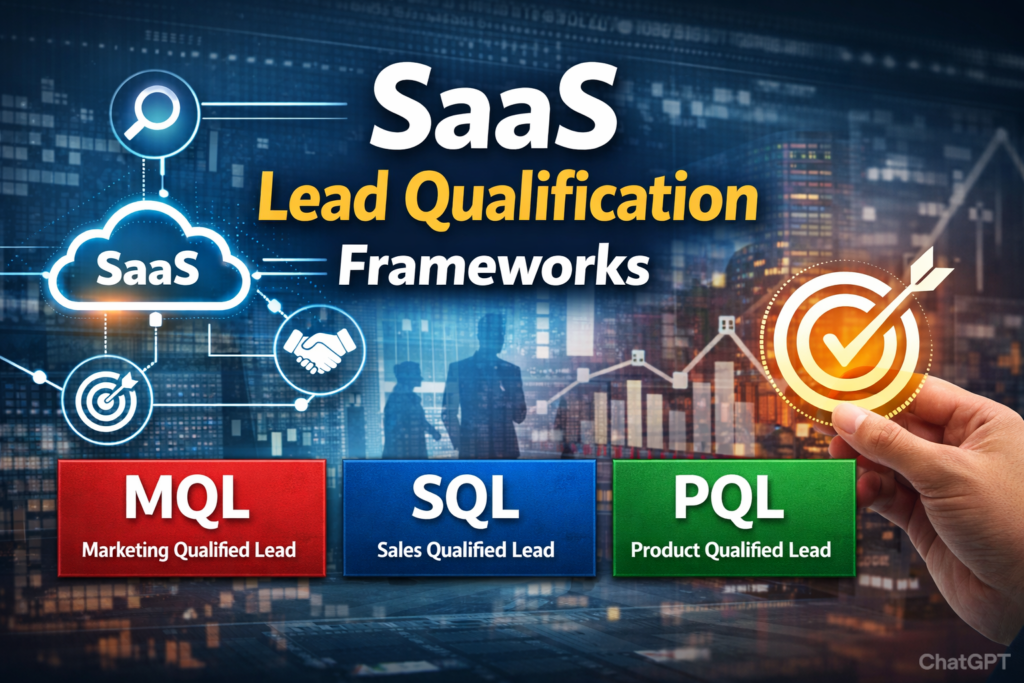
SaaS Lead Qualification Frameworks (MQL, SQL, PQL)
BY
The Author: Name: Asadullah Akbar Mughal (S/O M. Akbar Fateh) | Founder: IORC-SPSS Holdings & VILTRON Industries | Visionary Founder: IORC-SPSS Group of Holdings & Viltron Group of Industries | Location: Lahore, Pakistan | Contact: Call/WhatsApp: +92-324-4762964 | +92-312-8112366 | Email: asadullah.akbar9696@gmail.com | Professional Roles: Thought Leadership Strategist & Writer | Business Developer & Marketer | Process Optimiser | Sustainability Advocate | Engineer
Introduction of the SaaS Lead Qualification Frameworks (MQL, SQL, PQL)
The title “SaaS Lead Qualification Frameworks (MQL, SQL, PQL)” is precise and descriptive, reflecting both scope and purpose. SaaS (Software as a Service) emphasises cloud-based software solutions accessible online, such as CRMs or collaboration platforms. Lead refers to potential customers who show interest in a product or service, while Qualification describes the process of evaluating their readiness to purchase, engage, or adopt. Frameworks highlight structured systems or methodologies that provide a repeatable and scalable approach. The acronyms MQL, SQL, and PQL specify lead categories: Marketing Qualified Leads, Sales Qualified Leads, and Product Qualified Leads, each representing different engagement stages. For instance, a lead downloading a whitepaper is an MQL, requesting a product demo is an SQL, and actively using a trial version is a PQL. Overall, the title frames the article’s focus on systematically assessing, segmenting, and prioritising leads to improve SaaS growth and conversion outcomes.
Overview of the SaaS Lead Qualification Frameworks (MQL, SQL, PQL)
SaaS Lead Qualification Frameworks (MQL, SQL, PQL) combine essential terminology with actionable strategies for modern software marketing and sales. SaaS identifies cloud-based software solutions, while Lead represents prospective customers whose engagement can be tracked and nurtured. Qualification denotes the systematic evaluation of these leads, ensuring resources focus on those most likely to convert. Frameworks refer to structured, repeatable models applied consistently to manage leads efficiently. The acronyms MQL, SQL, and PQL further refine this system: MQLs engage through marketing content, SQLs are vetted for sales readiness, and PQLs demonstrate product-driven value through active usage. Collectively, the title signals a practical, strategic guide on identifying, categorising, and converting leads in SaaS businesses, helping organizations optimize pipeline velocity, engagement, and revenue outcomes while applying real-world insights from marketing, sales, and product-led growth strategies.
1. Understanding SaaS Lead Qualification Frameworks
In today’s highly competitive SaaS environment, lead qualification frameworks are essential for optimising growth, maximising revenue, and ensuring sustainable customer engagement. SaaS (Software as a Service) refers to cloud-based software solutions, which are increasingly integral for businesses worldwide. Lead qualification is the systematic process of identifying which prospective customers are most likely to convert into paying users. A framework provides a structured methodology for evaluating leads at different stages of engagement. Popular models include MQL (Marketing Qualified Lead), SQL (Sales Qualified Lead), and PQL (Product Qualified Lead), each representing a distinct step in the customer journey. Using these frameworks ensures that SaaS businesses allocate resources efficiently and improve conversion rates. For further insights on sustainable customer engagement in SaaS, visit SaaS Mag.
2. Why Lead Qualification Matters in SaaS
Lead qualification is the backbone of an effective SaaS growth strategy. Without properly identifying qualified leads, sales and marketing teams risk wasting valuable resources on prospects unlikely to convert. Marketing Qualified Leads (MQLs) are those who have engaged with marketing materials such as newsletters or whitepapers. Sales Qualified Leads (SQLs) have demonstrated intent, for instance, by requesting a product demo or consultation. Meanwhile, Product Qualified Leads (PQLs) show hands-on engagement, such as using a trial version or exploring key features. By implementing a structured framework, SaaS businesses can optimise their pipelines, increase customer retention, and foster sustainable growth aligned with ethical business practices. Learn more about ethical marketing strategies at Business Ethics Resources.
3. Marketing Qualified Leads (MQLs) Explained
Marketing Qualified Leads (MQLs) are prospects who have expressed interest in a SaaS product through marketing interactions but are not yet ready to make a purchase. Examples include newsletter sign-ups, whitepaper downloads, or webinar attendance. MQLs are crucial because they represent potential customers who are aware of your brand but require further nurturing. SaaS companies often use CRM systems like HubSpot to track these leads, evaluate engagement scores, and align marketing strategies with customer behaviour. By focusing on MQLs, businesses can implement personalised email campaigns, targeted content marketing, and retargeting strategies that respect user preferences and promote sustainable, value-driven engagement.
4. Sales Qualified Leads (SQLs) Defined
Sales Qualified Leads (SQLs) are prospects who have moved beyond initial interest and demonstrate readiness to engage with the sales team. For example, a lead requesting a product demo or a detailed pricing discussion is considered an SQL. Evaluating SQLs involves assessing intent signals, such as previous engagement, company fit, and buying potential. Proper handling of SQLs ensures efficient allocation of sales resources and higher conversion rates. To optimise the SQL process, SaaS businesses can refer to frameworks like Sales Hacker, which provide actionable insights on pipeline management, sales engagement, and ethical prospecting practices consistent with sustainable business values.
5. Product Qualified Leads (PQLs) in SaaS
Product Qualified Leads (PQLs) are users who have experienced tangible value from a SaaS product, usually via freemium trials or feature-limited versions. Unlike MQLs or SQLs, PQLs indicate actual product adoption. For instance, a trial user completing a key workflow or using premium features can be prioritised for conversion. PQLs allow SaaS teams to focus on prospects with proven engagement, improving efficiency and customer satisfaction. Using data analytics platforms like Mixpanel helps track behavioural signals and create predictive models for conversion. PQL-driven strategies align with ethical business growth, emphasising real value delivery and customer-centric engagement.
6. Structuring an Effective Lead Qualification Framework
An effective lead qualification framework organises MQLs, SQLs, and PQLs into a coherent system, defining entry criteria, evaluation methods, and conversion metrics. This structure ensures consistent evaluation across marketing, sales, and product teams. A practical approach includes lead scoring, behavioural tracking, and engagement analysis. Implementing such frameworks promotes sustainable growth, reduces resource wastage, and provides measurable ROI. For inspiration, SaaS businesses can review Forrester’s B2B Growth Reports, which outline proven, data-driven frameworks compatible with global ethical standards and sustainability practices.
7. Lead Scoring and Evaluation Metrics
Lead scoring is the process of assigning numerical values to each lead based on engagement, demographics, and behaviour. Metrics include website activity, content downloads, demo requests, and trial usage. SaaS companies can combine these scores with MQL, SQL, and PQL categories to prioritise prospects efficiently. Proper lead scoring ensures that marketing and sales teams focus on the most promising leads while promoting ethical and customer-centric engagement. Resources like Salesforce Blog guide scoring methods, automation, and best practices aligned with global SaaS standards.
8. Aligning Marketing, Sales, and Product Teams
Collaboration across marketing, sales, and product teams is critical to successfully implement lead qualification frameworks. Marketing nurtures MQLs, sales engages SQLs, and product teams monitor PQLs for value adoption. Regular communication, shared dashboards, and joint KPIs ensure alignment, reduce friction, and enhance customer experience. Tools like Asana or Trello can facilitate cross-team collaboration and transparency. This alignment also supports sustainable growth, ethical marketing, and value-driven SaaS adoption, in line with customer-focused business principles.
9. Ethical Considerations in Lead Qualification
While lead qualification focuses on conversion, maintaining ethical standards is crucial. Avoid over-automation, spammy emails, or aggressive retargeting. Respect user consent, privacy laws (GDPR, CCPA), and Islamic ethical values where applicable, ensuring marketing aligns with honesty and transparency. Ethical frameworks increase trust, customer loyalty, and brand reputation. Guides like Ethical Marketing Institute provide practical approaches for SaaS teams to integrate ethics into lead scoring, nurturing, and conversion processes.
10. Sustainability and Value-Driven SaaS Growth
SaaS businesses that integrate sustainable practices into lead qualification frameworks can enhance long-term customer relationships and business growth. This includes delivering genuine product value, focusing on customer success, and minimising waste in sales and marketing processes. By prioritising PQLs who actively use and benefit from the product, teams reinforce ethical business practices while optimising resource allocation. Platforms such as SaaS Mag provide insights into value-driven strategies that combine growth with sustainability, promoting responsible and customer-focused SaaS expansion.
11. Leveraging CRM Systems for Lead Management
Effective lead qualification relies on robust CRM (Customer Relationship Management) systems, which centralise data from marketing, sales, and product interactions. Platforms like Zoho CRM or HubSpot enable SaaS businesses to track MQLs, SQLs, and PQLs efficiently. Using CRM dashboards, teams can visualise pipeline stages, monitor engagement, and automate communication with leads. This approach reduces manual errors, ensures ethical follow-ups, and enhances conversion rates while aligning with sustainable business practices. By integrating CRM systems, SaaS teams can optimise resource allocation, focus on high-potential leads, and maintain transparency and accountability in lead qualification processes.
12. Personalisation in Lead Nurturing
Personalised engagement is key to converting leads at all stages. For MQLs, this could involve tailored email campaigns or content suggestions based on browsing history. For SQLs, personalisation may extend to customised demos or pricing proposals. PQLs benefit from feature recommendations and onboarding support. Tools like Marketo allow SaaS businesses to automate personalised outreach while maintaining ethical standards. Personalisation improves customer experience, increases engagement, and supports long-term sustainable growth by demonstrating value and responsiveness to user needs.
13. Data-Driven Insights in Lead Qualification
Using analytics and data-driven insights is crucial for refining lead qualification frameworks. Tracking metrics such as lead engagement, trial usage, and content interaction helps identify which leads are most likely to convert. Platforms like Mixpanel and Google Analytics provide actionable insights for marketing, sales, and product teams. Data-driven strategies enable businesses to make informed decisions, reduce wasted resources, and ethically prioritise leads, ensuring sustainable SaaS growth that aligns with value delivery and customer satisfaction.
14. Automating Lead Scoring and Follow-Ups
Automation streamlines lead scoring and follow-ups, ensuring timely communication without overburdening teams. SaaS platforms such as ActiveCampaign or Pardot allow automatic scoring of leads based on predefined criteria like demo requests, content downloads, or trial engagement. Automation also ensures consistent, compliant, and respectful outreach, reducing the risk of intrusive messaging. This efficiency supports ethical engagement, improves pipeline velocity, and helps teams focus on leads that are most likely to convert, ultimately enhancing sustainable revenue growth.
15. Integrating Product-Led Growth (PLG) Strategies
Product-Led Growth (PLG) complements MQL, SQL, and PQL frameworks by allowing the product itself to drive lead engagement. PQLs are the primary focus in PLG strategies because their direct experience with the product demonstrates real value. SaaS companies can use trial analytics to identify high-value users and target them with tailored onboarding or upselling campaigns. Insights from resources like OpenView Partners emphasise the importance of PLG for sustainable SaaS growth, ethical customer engagement, and responsible resource allocation.
16. Aligning Content Marketing with Lead Qualification
Content marketing plays a vital role in converting leads across all stages. MQLs engage with educational blog posts, case studies, and webinars. SQLs may seek detailed product guides or ROI calculators, while PQLs benefit from tutorials, feature updates, and success stories. By aligning content strategy with lead qualification frameworks, SaaS businesses ensure meaningful engagement and maximise conversions. Trusted sources like Content Marketing Institute provide guidelines for ethical, value-driven content strategies compatible with global SaaS standards.
17. Segmenting Leads for Targeted Outreach
Segmentation enhances lead qualification efficiency by categorising prospects based on industry, company size, behaviour, or engagement level. For example, small business leads may require different nurturing than enterprise prospects. Segmenting MQLs, SQLs, and PQLs allows marketing and sales teams to craft targeted campaigns that respect user preferences and ethical engagement standards. Using segmentation tools within platforms like Salesforce ensures precise targeting, increases conversion likelihood, and reduces unnecessary outreach, supporting sustainable SaaS growth and customer satisfaction.
18. Nurturing Long-Term Relationships
Lead qualification is not only about immediate conversion; it also fosters long-term customer relationships. SaaS businesses can implement continuous engagement strategies, including follow-up emails, feature updates, and customer success initiatives. Prioritising PQLs who actively use the product ensures value delivery while maintaining trust. Ethical and sustainable engagement builds loyalty, reduces churn, and encourages referrals. Resources like HubSpot Academy provide insights into best practices for nurturing leads responsibly and maintaining customer-centric growth strategies.
19. Evaluating Pipeline Efficiency
Regular evaluation of the lead pipeline is essential for optimisation. Monitoring conversion rates between MQLs, SQLs, and PQLs helps identify bottlenecks, inefficient processes, and opportunities for improvement. SaaS businesses can use tools such as Pipefy or Monday.com to visualise workflows, track key metrics, and implement ethical, data-driven improvements. A well-evaluated pipeline ensures sustainable resource use, faster conversion, and enhanced customer satisfaction across all lead stages.
20. Incorporating Feedback Loops
Feedback loops from sales, marketing, and product teams help refine lead qualification frameworks continuously. For instance, insights from sales on lead readiness, product teams on feature adoption, and marketing on engagement trends allow for iterative improvement. Implementing feedback-driven processes aligns lead qualification with real-world behaviour, ethical engagement, and customer-centric SaaS growth. Companies can reference Harvard Business Review for research-backed methods on incorporating feedback loops to optimise pipelines while maintaining ethical standards and sustainable practices.
Conclusion: Driving Sustainable SaaS Growth with Lead Qualification Frameworks
In conclusion, SaaS Lead Qualification Frameworks (MQL, SQL, PQL) are essential tools for modern SaaS businesses aiming to optimise engagement, increase conversion rates, and achieve sustainable growth. By systematically categorising leads into Marketing, Sales, and Product Qualified types, companies can allocate resources efficiently, focus on high-potential prospects, and ensure a value-driven customer experience. Integrating CRM systems, data analytics, personalised content, and cross-team collaboration strengthens the framework, while ethical practices, privacy compliance, and sustainable strategies reinforce trust and long-term loyalty. Furthermore, embracing Product-Led Growth, continuous feedback loops, and pipeline evaluation ensures SaaS organisations remain adaptive, competitive, and aligned with global best practices. Ultimately, a well-structured lead qualification strategy not only enhances revenue but also promotes responsible, human-centric, and environmentally conscious business growth, reflecting a holistic approach to SaaS success.
The Author: Asadullah Akbar Mughal (S/O M. Akbar Fateh) | Founder: IORC-SPSS Holdings & VILTRON Industries | Visionary Founder: IORC-SPSS Group of Holdings & Viltron Group of Industries | Location: Lahore, Pakistan | Contact: Call/WhatsApp: +92-324-4762964 | +92-312-8112366 | Email: asadullah.akbar9696@gmail.com | Professional Roles: Thought Leadership Strategist & Writer | Business Developer & Marketer | Process Optimiser | Sustainability Advocate | Engineer
As the author, I emphasise that effective lead qualification is the foundation of sustainable SaaS growth. In today’s competitive digital landscape, merely generating leads is not enough — understanding which prospects are ready to engage and derive value from your product is critical.
The frameworks discussed — MQL, SQL, and PQL — are not just acronyms; they represent a strategic methodology to optimise sales and marketing efforts, improve pipeline efficiency, and deliver genuine value to customers.
Implementing these frameworks requires cross-functional collaboration, data-driven insights, and ethical, customer-centric practices. By prioritising leads who actively engage with marketing content or product features, SaaS companies can maximise ROI while fostering trust and long-term relationships.
I encourage SaaS founders, growth leaders, and business developers to adopt these frameworks thoughtfully, integrating analytics, personalisation, and sustainable strategies to achieve measurable success.
BY: Asadullah Akbar Mughal (S/O Muhammad Akbar Fateh)
📞 WhatsApp / Call: +92-324-4762964 | +92-312-8112366
📧 Email: asadullah.akbar9696@gmail.com
| bilal.syeed9696@gmail.com
#SaaS #LeadQualification #MQL #SQL #PQL #SaaSGrowth #CustomerSuccess