

Introduction
According to recent industry studies, nearly 70% of real estate leads never convert into actual buyers. For agents and brokers, this means countless hours spent following up with prospects who may have little intention of purchasing a property.
In an increasingly competitive market, identifying serious buyers quickly has become one of the biggest challenges in real estate. This is where AI agents are making a significant impact. By analyzing buyer behavior, property searches, engagement patterns, and historical data, AI-powered systems can identify high-intent property buyers with remarkable accuracy.
As real estate businesses continue adopting artificial intelligence to improve lead generation and conversion rates, understanding how these intelligent tools work has become essential.
What Are High-Intent Property Buyers?
In the fast-paced world of real estate, not all leads are created equal. A high-intent property buyer is an individual who exhibits clear and consistent signals indicating a strong likelihood and readiness to purchase a property in the near future. These are not casual browsers or speculative inquirers; they are serious prospects actively moving through the buying journey.
Identifying these buyers is paramount for real estate success because they represent the most efficient use of an agent’s time and resources. Focusing on high-intent leads leads to higher conversion rates, shorter sales cycles, and ultimately, more closed deals.
Conversely, spending too much time on low-intent leads can lead to burnout and missed opportunities. AI agents are designed to cut through the noise, allowing agents to concentrate on these valuable prospects.
How AI Agents Work in Real Estate
At its core, an AI agent in real estate is a sophisticated software system designed to automate and optimize various tasks traditionally performed by human agents. Unlike a basic chatbot that follows a predefined script, an AI agent possesses a degree of autonomy.
It can reason through conversations, determine necessary information, and take proactive actions such as scheduling viewings, updating CRM records, or flagging high-priority leads.
Traditionally, real estate processes relied heavily on manual effort, intuition, and reactive responses.
Agents would manually sort through inquiries, conduct property searches, and manage follow-ups.

This often led to inefficiencies, missed opportunities, and a significant time investment in administrative tasks. AI agents, however, leverage machine learning and natural language processing to analyze vast amounts of data, identify patterns, and make intelligent predictions.
They can operate across multiple channels—websites, messaging apps, email, and even voice—pulling information from CRM systems, listing databases, and market data to provide personalized and accurate responses.
This allows human agents to shift their focus from repetitive tasks to high-value activities like negotiation and client relationship building. The global AI real estate market was valued at USD 2.9 billion in 2024 and is projected to skyrocket to USD 41.5 billion by 2033, growing at an impressive CAGR of 30.5%. This growth underscores the increasing adoption of property tech AI solutions.
5 Powerful Ways AI Agents Identify High-Intent Property Buyers
1. Behavioral Tracking and Online Activity Analysis
One of the most fundamental ways AI agents identify high-intent property buyers is through sophisticated behavioral tracking and online activity analysis. In today’s digital age, every click, search, and interaction leaves a digital footprint that, when analyzed by AI, can reveal a wealth of information about a potential buyer’s intentions.
AI agents monitor various online behaviors, including repeated visits to specific property pages, the frequency of property searches, saved listings, and interactions with mortgage calculators or financing information.
For instance, a buyer who consistently views the same property five times in a week, saves it to their favorites, and then clicks on a link to calculate a mortgage payment is exhibiting clear signals of high intent.
AI-Powered Lead Scoring Systems
AI-powered lead scoring systems represent a significant leap forward from traditional, manual methods of evaluating prospects. Traditional lead scoring often relies on fixed, rule-based criteria, such as assigning points for specific actions like visiting a website or opening an email.
These systems evaluate a wide range of signals, including property engagement, communication patterns, website behavior, and historical data from previously closed deals. The true power of AI lead scoring lies in its ability to continuously learn and improve its predictions over time.
When a deal closes, the AI model analyzes the entire journey of that lead, identifies the key behaviors that led to the conversion, and uses that knowledge to find similar patterns in other prospects.
For example, an AI system might recognize that a lead who responds quickly to text messages and frequently views high-end listings is a strong candidate for immediate follow-up, automatically flagging them as a hot prospect for the agent. Chatbots powered by AI can enhance lead generation in real estate by 33%.
Predictive Buyer Intent Analysis
Predictive buyer intent analysis takes lead scoring a step further by forecasting a prospect’s future actions and likelihood of conversion based on their past and present behavior. This goes beyond simply identifying current interest; it anticipates future intent.
AI models analyze thousands of data points, including mortgage history, length of ownership, demographics, and even social signals, to gauge market mood and buyer readiness.
This advanced analysis allows real estate agents to proactively engage with potential buyers even before they explicitly express interest.
Predictive analytics can also incorporate behavioral data from various sources, including online browsing, email engagement, and even property-specific interactions, to build a comprehensive profile of a buyer’s journey.
This enables agents to prioritize leads who are not just currently active but who are on a trajectory towards making a purchase, significantly increasing the effectiveness of their sales efforts. AI tools can predict property price trends with 95% accuracy, aiding smarter investment decisions.
CRM Data Integration and Smart Segmentation
Effective lead identification and nurturing are significantly enhanced when AI agents seamlessly integrate with Customer Relationship Management (CRM) systems. CRM platforms serve as central repositories for all client interactions, preferences, and historical data.
When AI agents can access and analyze this rich dataset, they gain a holistic view of each prospect, enabling more intelligent segmentation and personalized engagement.
For example, an AI agent can cross-reference a lead’s online behavior with their past communication history in the CRM to understand their specific needs, budget, and timeline.
This integration allows for smart segmentation, where leads are grouped not just by basic demographics, but by their nuanced behaviors, intent levels, and engagement patterns.
AI can identify micro-segments of buyers who share similar characteristics or are at similar stages in their buying journey, allowing agents to deliver highly targeted marketing messages and property recommendations.
For instance, an AI-powered CRM can automatically flag a lead who has previously expressed interest in waterfront properties and is now actively viewing listings in a specific coastal town, ensuring they receive relevant updates.
This level of personalized outreach, driven by integrated AI and CRM data, significantly improves the chances of conversion by making every interaction more relevant and impactful for the potential buyer. In 2026, over 87% of brokerages and agents are actively using real estate AI tools daily.
Real-Time Engagement Monitoring
In the fast-paced real estate market, timing is everything. High-intent buyers often make decisions quickly, and a delayed response from an agent can mean a lost opportunity.
AI agents excel at real-time engagement monitoring, ensuring that agents are alerted the moment a lead exhibits critical signals of readiness. This capability allows for immediate, proactive engagement, striking when the iron is hot.
When a lead’s activity signals a heightened level of interest, such as scheduling a showing, viewing high-end listings repeatedly, or increasing their browsing frequency, the AI immediately notifies the assigned agent.
For example, if a prospect spends an unusual amount of time on a specific property’s virtual tour or requests additional information on a listing they’ve viewed multiple times, the AI can trigger an instant alert.
This allows the agent to reach out with a personalized message or offer further assistance precisely when the buyer is most engaged and receptive. This rapid response capability, powered by AI, gives agents a significant competitive advantage, dramatically increasing the odds of making a connection and converting a high-intent lead into a client.
Benefits of Using AI for Identifying Buyers
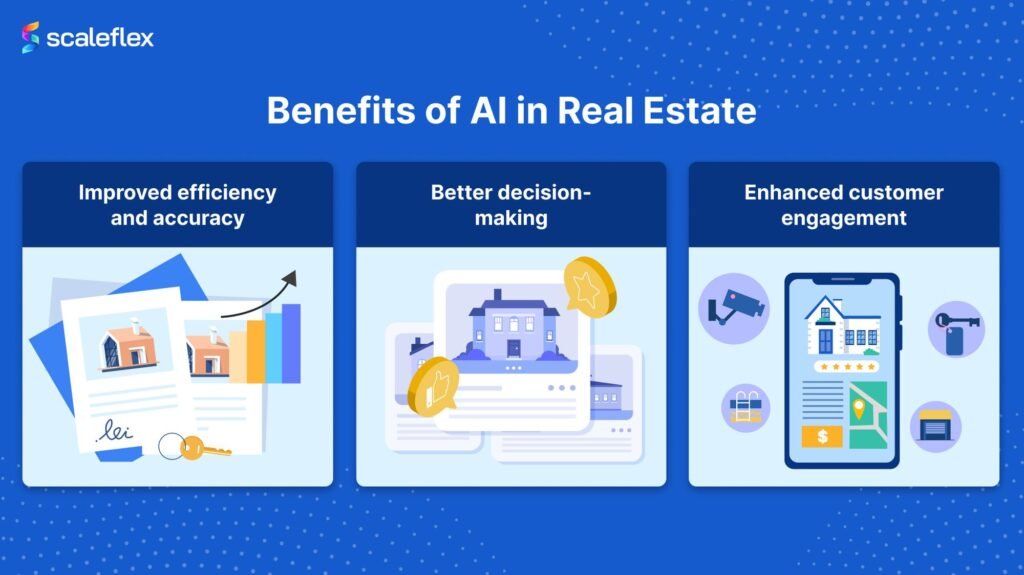
The integration of AI agents into the real estate lead identification process yields a multitude of benefits for agents and brokerages alike. These advantages translate directly into improved operational efficiency, enhanced client satisfaction, and ultimately, a healthier bottom line.
Increase Conversion Rates
By accurately identifying and prioritizing high-intent leads, AI agents enable real estate professionals to focus their efforts on prospects who are genuinely ready to buy. This targeted approach significantly increases the likelihood of converting leads into clients. Studies have shown that real estate agencies implementing AI lead scoring can experience a substantial increase in conversion rates, with some reporting up to a 30% boost. This is because agents are spending less time on unqualified leads and more time nurturing those with a high probability of closing.
Save Time for Agents
One of the most immediate and tangible benefits of AI is the significant reduction in manual work for agents. AI automates repetitive tasks such as sifting through inquiries, initial lead qualification, and even scheduling follow-ups.
This frees up valuable time that agents can then reallocate to more critical activities, such as building relationships, conducting property showings, and negotiating deals.
By automating routine tasks, AI can save agents hours each week, leading to a more productive and less-stressed workforce.
Improve Marketing Efficiency
AI agents enhance marketing efficiency by providing actionable insights into buyer behavior and preferences. This allows for the creation of highly targeted marketing campaigns that resonate with specific segments of high-intent buyers.
Instead of broad, untargeted campaigns, AI helps agents deliver personalized messages and property recommendations to the right audience at the right time.
This precision in marketing not only improves engagement but also optimizes ad spend, leading to a higher return on investment.
Challenges and Limitations
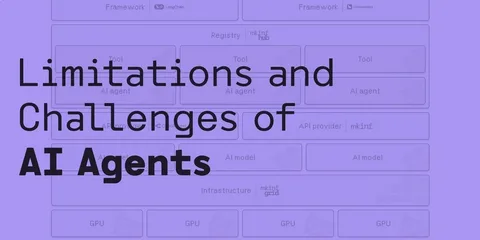
While AI agents offer transformative benefits to the real estate industry, it is crucial to acknowledge their inherent challenges and limitations. Understanding these aspects ensures a balanced perspective and guides responsible implementation.
Data Privacy Concerns
Real estate transactions involve a significant amount of sensitive personal and financial information. The extensive data collection and analysis performed by AI agents raise legitimate concerns about data privacy and security. Ensuring compliance with regulations like GDPR or CCPA and maintaining robust cybersecurity measures is paramount. Without proper governance and guardrails, the risk of data breaches or misuse of personal information can undermine trust and lead to severe repercussions.
AI Accuracy Limitations
AI models, while powerful, are only as good as the data they are trained on. If the training data contains biases or is incomplete, the AI’s predictions and lead scoring can perpetuate those inaccuracies. For instance, historical biases in property valuations could be amplified if the AI is not carefully monitored and adjusted. Human oversight remains essential to ensure the accuracy and fairness of AI-driven insights, preventing the system from making discriminatory or incorrect assessments.
Integration Challenges
Integrating new AI systems with existing legacy CRM platforms, listing databases, and other real estate software can be complex. Compatibility issues, data migration hurdles, and the need for seamless workflow integration can pose significant technical and operational challenges. A successful AI implementation requires careful planning and often necessitates custom development or robust API integrations to ensure all systems communicate effectively and data flows smoothly across the ecosystem.
Top AI Tools for Identifying High-Intent Property Buyers
Here’s a look at some of the leading AI tools and platforms that real estate professionals can leverage to identify and engage high-intent buyers. These tools offer diverse functionalities, from lead generation and CRM integration to predictive analytics and automated communication.
| Tool Name | Key Features | Best For | Pricing Model |
| Structurely | AI-powered conversational AI for lead qualification and nurturing, 24/7 responsiveness. | Automating initial lead engagement and qualification. | Subscription-based (details on website) |
| Ylopo | AI-driven digital marketing platform, dynamic ad generation, and lead nurturing. | Comprehensive digital marketing and lead generation. | Custom pricing based on services. |
| Offrs | Predictive analytics for identifying likely sellers and buyers, and market insights. | Proactive lead generation and market intelligence. | Subscription-based. |
| Zillow AI | AI-powered property valuation, personalized recommendations, and market trend analysis. | Property valuation and personalized buyer experiences. | Integrated into the Zillow platform. |
| Lofty AI CRM | AI copilot for end-to-end lead lifecycle automation, SEO-optimized IDX websites. | Big and mid-sized brokerages focused on marketing automation and lead nurturing. | Custom (starts ~$500/month) [7] |
| Salesforce Einstein | AI capabilities are integrated into Salesforce CRM for sales forecasting, lead scoring, and personalized customer journeys. | Businesses already using Salesforce for enhanced CRM capabilities. | Add-on to Salesforce subscriptions. |
| AscendixRE | CRM for commercial real estate with an AI suite for email parsing, AI agent for CRM search/data entry, and Composer AI for marketing materials. | Commercial real estate teams needing customization, multiple platform integration, and large volume data handling. | $99/month + AI Suite ($39-$119) [7] |
| Lindy AI | Custom AI agents for research, lead qualification, personalized follow-ups, and monitoring listings. | Small teams building communication/task agents with high flexibility. | Starts at $30/month/3,000 credits [7] |
Future of AI in Real Estate Buyer Identification
The trajectory of AI in real estate buyer identification points towards even more sophisticated and autonomous systems. The future promises a landscape where AI agents are not just assisting but actively driving more personalized and efficient interactions.
Predictive Analytics
Predictive analytics will continue to evolve, moving beyond current capabilities to anticipate market shifts and individual buyer needs with even greater accuracy. This will involve integrating a wider array of data points, including macroeconomic indicators, social media sentiment, and even hyper-local event data.
Autonomous AI Agents
The concept of autonomous AI agents will become more prevalent. These agents will be capable of handling end-to-end lead qualification and nurturing processes with minimal human intervention. From initial contact and answering complex property questions to scheduling viewings and even initiating personalized follow-up campaigns, autonomous AI will manage the entire early-stage buyer journey.
Hyper-Personalized Property Recommendations
Future AI systems will deliver hyper-personalized property recommendations that go far beyond what current matching algorithms can. By deeply understanding a buyer’s lifestyle, preferences, and even unspoken needs through continuous learning and analysis of interactions, AI will be able to suggest properties that align perfectly with their aspirations.
Conclusion
AI agents are no longer a futuristic concept but a present-day reality rapidly transforming the real estate industry. By offering powerful capabilities in behavioral tracking, lead scoring, predictive analysis, CRM integration, and real-time engagement monitoring, these intelligent systems empower real estate professionals to identify high-intent property buyers with unprecedented accuracy and efficiency. While challenges related to data privacy, AI accuracy, and integration complexities exist, the benefits of increased conversion rates, significant time savings for agents, and improved marketing efficiency are undeniable. The global AI real estate market, valued at USD 2.9 billion in 2024, is projected to reach USD 41.5 billion by 2033, demonstrating the immense potential and growing adoption of these technologies.
As AI technology continues to advance, its role in real estate lead generation and buyer identification will only grow, leading to more predictive, autonomous, and hyper-personalized experiences.