

Introduction
When people need a plumber, they usually start by searching Google for phrases like “plumber near me” or “emergency plumbing services.” If your plumbing business isn’t showing up in those search results, potential customers are likely choosing one of your competitors instead. That’s why SEO for plumbers has become one of the most reliable ways to attract local customers and grow a plumbing business.
In this guide, you’ll learn how SEO works for plumbing businesses and how to use it to improve your visibility in local search results. We’ll cover everything from the basics of search engine optimization to practical local SEO strategies that can help your website rank higher on Google. You’ll also discover how to optimize your Google Business Profile, choose the right keywords, fix common SEO problems, drive more traffic to your website, and turn that traffic into real leads and paying customers. Whether you’re a solo plumber or run a larger plumbing company, these strategies can help you strengthen your online presence and bring in more local business over time.
What Is SEO for Plumbers?

SEO for plumbers is the strategic process of optimizing a plumbing business’s online presence to achieve higher rankings in search engine results, particularly Google, for relevant local searches.
This involves making your website and Google Business Profile (GBP) more visible to potential customers actively seeking plumbing services like “plumber near me” or “emergency plumber.”
Effective SEO ensures that when a resident needs a plumbing service, your business is among the first they see, leading to increased calls and leads.
Why SEO Matters for Plumbing Companies
For plumbing companies, SEO is not just about visibility; it’s about connecting with customers at their moment of need. Unlike traditional advertising, SEO targets individuals who are already searching for your services, making it a highly effective and cost-efficient marketing channel.
It builds trust and credibility, establishes your business as an authority in the local market, and provides a sustainable source of leads.
Benefits of SEO for Plumbers
Implementing a robust SEO strategy offers numerous advantages for plumbing businesses:
- Increased Online Visibility: Your business appears prominently when potential customers search for plumbing services, ensuring you capture their attention.
- Higher Quality Leads: SEO attracts users with high commercial intent, meaning they are actively looking to hire a plumber, leading to more qualified leads and service calls.
- Cost-Effectiveness: Compared to paid advertising, SEO provides a better long-term return on investment by generating organic traffic without per-click costs.
- Enhanced Local Presence: Dominating local search results helps you reach customers in your specific service areas, crucial for a geographically dependent business.
- Improved Trust and Credibility: High search rankings and positive online reviews build consumer confidence, positioning your business as reliable and professional.
- Competitive Advantage: Outranking competitors in search results means you capture a larger share of the local market.
Common Plumbing SEO Problems
Many plumbing businesses face similar challenges in their online marketing efforts. Understanding these common problems is the first step toward implementing effective solutions.
Problem: No Google Visibility
Reason: Often, plumbing websites fail to appear in Google search results due to a lack of proper optimization. This can stem from not using relevant keywords, neglecting local SEO, or having an unoptimized Google Business Profile.
Impact: Without visibility, potential customers cannot find your business online, leading to missed opportunities and lost revenue. Competitors with better SEO will capture these leads.
Solution: Implement a comprehensive SEO strategy focusing on keyword research, on-page optimization, technical SEO, and robust local SEO efforts.
Example Checklist:
- Conduct thorough keyword research to identify terms like “plumber near me,” “emergency plumber,” and “plumbing services [city name].”
- Optimize website content, meta titles, and descriptions with target keywords.
- Ensure your Google Business Profile is fully optimized and regularly updated.
- Address technical SEO issues such as website speed and mobile-friendliness.
Problem: Lack of Reviews and Trust
Reason: Many plumbers do not actively solicit or manage online reviews, leading to a scarcity of social proof. This can also be due to not having a complete Google Business Profile where reviews are prominently displayed.
Impact: In an industry where trust is paramount, a lack of reviews or an abundance of negative feedback can deter potential customers. People often rely on reviews to make hiring decisions, and without them, your business may be perceived as unreliable or new.
Solution: Implement a proactive strategy for gathering customer reviews, responding to all feedback, and showcasing positive testimonials across your online platforms.
Example Checklist:
- Ask satisfied customers for reviews on Google, Yelp, and other relevant platforms.
- Respond promptly and professionally to all reviews, both positive and negative.
- Integrate review widgets on your website to display social proof.
- Address any negative feedback constructively and offer solutions.
Problem: Unoptimized Website
Reason: A website that is slow, not mobile-friendly, difficult to navigate, or lacks clear service information will struggle to rank and convert visitors. Many plumbing websites are outdated or not built with SEO best practices in mind.
Impact: A poor website experience leads to high bounce rates, low engagement, and ultimately, lost leads. Google prioritizes user experience, so an unoptimized site will be penalized in search rankings.
Solution: Conduct a thorough website audit to identify and fix technical and on-page SEO issues. Focus on improving site speed, mobile responsiveness, content quality, and user experience.
Example Checklist:
- Ensure your website loads quickly on all devices.
- Implement a responsive design for optimal viewing on mobile phones and tablets.
- Organize your website with clear navigation and service pages.
- Create high-quality, informative content that addresses customer needs.
Problem: Intense Competition
Reason: The plumbing industry is highly competitive, especially in urban areas. Many established businesses have already invested in SEO, making it challenging for newer or less optimized companies to gain traction.
Impact: Without a strong SEO strategy, your business will be overshadowed by competitors who appear higher in search results, capturing the majority of local leads.
Solution: Develop a differentiated SEO strategy that leverages local SEO, niche keywords, and superior content to stand out. Focus on building authority and trust over time.
Example Checklist:
- Identify niche plumbing services where competition might be lower.
- Focus on hyper-local SEO to target specific neighborhoods or districts.
- Create unique and valuable content that addresses specific pain points of your target audience.
- Build high-quality backlinks from reputable local businesses and industry sites.
Proven SEO Solutions in 2026
To overcome common challenges and achieve sustainable growth, plumbing businesses need to implement a multi-faceted SEO strategy. The following sections outline key areas of focus.
Local SEO for Plumbers
Local SEO is arguably the most critical component for plumbing businesses, as the majority of their customers are geographically located. Optimizing for local search ensures your business appears when nearby residents search for services. This is where keywords like “plumbers seo” and “seo for plumbing services” become highly relevant.

Google Business Profile Optimization
Your Google Business Profile (GBP) is your most powerful local SEO tool. A fully optimized GBP ensures your business appears prominently in Google Maps and local search results.
- Complete Information: Ensure your business name, address, phone number (NAP), website, and operating hours are 100% accurate and consistent across all online platforms. Inconsistencies can harm your local ranking.
- Categories and Services: Select the most relevant primary and secondary categories for your plumbing business. Detail all the services you offer (e.g., pipe repair, water heater installation, drain cleaning) to help Google understand your offerings.
- Photos and Videos: Upload high-quality images of your team, vehicles, completed projects (before/after), and office. Visuals build trust and engagement. Google Posts can also be used to share updates and offers.
- Reviews: Actively solicit and respond to customer reviews. More positive reviews and consistent engagement significantly boost your GBP ranking and customer trust. This is vital for “best seo for plumbers.”
- Q&A Section: Proactively answer common questions in the Q&A section and encourage customers to ask questions. This provides valuable information and signals activity to Google.
NAP (Name, Address, Phone Number) Consistency
Maintaining consistent NAP information across your website, GBP, and all online directories (citations) is crucial for local SEO. Inaccurate NAP data confuses search engines and can negatively impact your rankings.
Citations
Citations are online mentions of your business’s NAP information. These can be on local directories, industry-specific sites, or general business listings. Building a robust portfolio of accurate citations reinforces your business’s legitimacy and helps Google verify your location.
Map Pack
The Google Map Pack is the coveted top-3 listing in local search results, often appearing above organic search results. Optimizing your GBP, gathering reviews, and ensuring NAP consistency are key factors in ranking in the Map Pack, driving significant local traffic.
Service Areas
Clearly define your service areas within your GBP and on your website. This helps Google understand where you operate and ensures you appear in searches from those specific locations.
Location Pages
If you serve multiple distinct geographic areas, create dedicated location pages on your website for each. These pages should be optimized with local keywords, testimonials from clients in that area, and specific service offerings for that location. This is a key strategy for “seo for plumbing companies.”
Keyword Strategy
Effective keyword research is the foundation of any successful SEO campaign. It involves identifying the terms and phrases your target audience uses to find plumbing services. This includes a mix of broad and long-tail keywords, such as “seo for plumber” and “affordable seo for plumbers.”
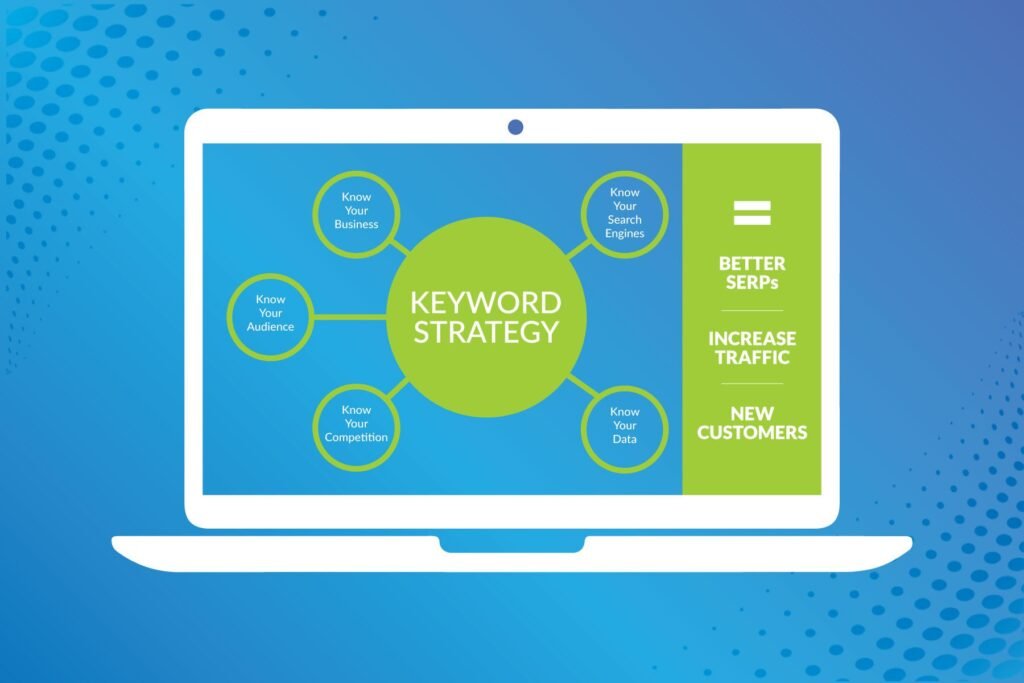
- Identify Core Keywords: Start with broad terms like “plumber,” “plumbing services,” and “emergency plumbing.”
- Local Modifiers: Add geographic modifiers such as “plumber [city name], “plumbing repair near me,” or “24/7 plumber [neighborhood]”
- Service-Specific Keywords: Target keywords related to specific services you offer, e.g., “water heater repair [city],” “drain cleaning [city]” “leak detection services.”
- Long-Tail Keywords: These are longer, more specific phrases that often indicate higher purchase intent, such as “how to fix a leaky faucet in [city]” or “best plumbing contractor for commercial buildings.”
- Competitor Keyword Analysis: Analyze what keywords your competitors are ranking for to identify opportunities and gaps in your own strategy.
On-page SEO
On-page SEO refers to optimizing individual web pages to rank higher and earn more relevant traffic in search engines. This involves optimizing both the content and HTML source code of a page.

- Content Optimization: Create high-quality, informative, and engaging content that addresses your target audience’s needs and questions. Naturally integrate your target keywords, including variations like “seo plumbers” and “seo for plumbing company,” throughout the content.
- Title Tags and Meta Descriptions: Craft compelling and keyword-rich title tags and meta descriptions for each page. These appear in search results and influence click-through rates.
- Header Tags (H1, H2, H3): Use header tags to structure your content logically. Each page should have one H1 tag (main title), and H2s and H3s should break down the content into readable sections, incorporating relevant keywords.
- Internal Linking: Link relevant pages within your website to improve navigation, distribute link equity, and help search engines understand your site’s structure.
- Image Optimization: Compress images for faster loading times and use descriptive alt text that includes keywords. This helps search engines understand the image content.
- URL Structure: Create clean, descriptive, and keyword-rich URLs for each page.
Technical SEO
Technical SEO ensures that search engines can effectively crawl, index, and understand your website. It deals with the backend elements that impact your site’s performance in search results.

- Website Speed: Optimize your website for fast loading times. Slow websites lead to poor user experience and lower rankings. Tools like Google PageSpeed Insights can help identify issues.
- Mobile-Friendliness: Ensure your website is fully responsive and provides an excellent user experience on all mobile devices. Google uses mobile-first indexing.
- XML Sitemaps: Submit an XML sitemap to Google Search Console to help search engines discover all important pages on your site.
- Robots.txt: Use a robots.txt file to guide search engine crawlers, telling them which pages or sections of your site they should or should not crawl.
- Schema Markup: Implement schema markup (structured data) to provide search engines with more context about your business, services, and reviews. This can lead to rich snippets in search results.
- SSL Certificate (HTTPS): Ensure your website uses HTTPS for security. This is a ranking factor and builds trust with users.
- Broken Links and 404 Errors: Regularly check for and fix broken internal and external links, as well as 404 errors, which can negatively impact user experience and SEO.
Link Building
Link building is the process of acquiring hyperlinks from other websites to your own. These backlinks act as
votes of confidence, signaling to search engines that your website is a credible and authoritative source. This is crucial for improving your domain authority and search rankings.

- Local Business Directories: List your business in relevant local and industry-specific directories. These often provide valuable backlinks and improve local visibility.
- Guest Blogging: Write guest posts for other reputable websites in related industries (e.g., home improvement, real estate) and include a backlink to your site.
- Partnerships and Collaborations: Collaborate with local businesses for cross-promotional content or joint ventures that can result in backlinks.
- Broken Link Building: Find broken links on other websites and suggest your content as a replacement.
- Content Promotion: Promote your high-quality content through social media and outreach to encourage natural backlinks.
Content Marketing
Content marketing involves creating and distributing valuable, relevant, and consistent content to attract and retain a clearly defined audience. For plumbers, this means producing content that answers common questions, solves problems, and showcases expertise, naturally incorporating keywords like “seo for plumbing” and “plumbers seo.”

- Blog Posts: Write articles on topics such as “How to Prevent Burst Pipes in Winter,” “Signs You Need a Water Heater Repair,” or “DIY Drain Cleaning Tips (and When to Call a Pro).” This attracts organic traffic and positions you as an expert.
- Service Pages: Create detailed service pages for each plumbing service you offer (e.g., water heater installation, leak detection, sewer line repair). These pages should be optimized with relevant keywords and provide clear calls to action.
- FAQs: Develop a comprehensive FAQ section that addresses common customer queries. This not only helps users but also provides valuable content for search engines.
- Video Content: Create short videos demonstrating plumbing repairs, offering maintenance tips, or showcasing your team and services. Videos can be embedded on your website and shared on social media.
- Case Studies/Testimonials: Share success stories and positive customer experiences to build trust and demonstrate your expertise.
How Long Does Plumbing SEO Take?
SEO is a long-term strategy, and results are not instantaneous. For plumbing businesses, a realistic timeline for seeing significant results typically ranges from 6 to 12 months. Initial improvements in rankings and traffic may be observed sooner, but sustained growth and a strong return on investment require consistent effort. Factors like market competition, the current state of your website, and the intensity of your SEO efforts can influence this timeline.

How Much Does Plumbing SEO Cost?
The cost of plumbing SEO can vary widely depending on the scope of services, market competitiveness, and the agency you choose. Based on industry benchmarks, plumbing SEO services typically range from $1,000 to $7,500 per month.

Here’s a general breakdown of pricing models:
- Basic Local SEO: $1,000-$2,000/month. This usually includes keyword research, on-page optimization, and basic Google Business Profile optimization.
- Mid-Tier SEO: $2,000-$4,000/month. This level often adds content creation, link building, and more comprehensive Google Business Profile management.
- Advanced SEO: $4,000-$7,500+/month. This is for highly competitive markets or businesses seeking aggressive growth, covering comprehensive strategies including technical SEO, multi-location targeting, and extensive content marketing.
One-time projects, such as website audits or technical SEO fixes, can range from $1,000 to $3,000, depending on complexity.
Why Hire a Plumbing SEO Agency?
Hiring a specialized plumbing SEO agency can offer significant advantages over managing SEO in-house. These agencies possess expertise in the unique challenges and opportunities within the plumbing industry, ensuring a more effective and efficient strategy.

- Industry Expertise: Agencies specializing in plumbing SEO understand the industry’s specific keywords, local search nuances, and competitive landscape.
- Time Savings: SEO is a complex and time-consuming process. Outsourcing allows plumbing business owners to focus on their core services.
- Access to Tools and Technology: Agencies invest in advanced SEO tools and software that may be cost-prohibitive for individual businesses.
- Proven Strategies: Reputable agencies have a track record of success and can implement proven strategies to drive results.
- Stay Updated: SEO best practices are constantly evolving. Agencies stay abreast of the latest algorithm changes and industry trends.
Comparison: Paid Ads vs. Organic SEO
| Feature | Paid Ads (PPC) | Organic SEO |
| Upfront Cost | High (Pay per click/lead) | Lower (Long-term investment) |
| Sustainability | Stops the second you stop paying | Grows and compounds over time |
| Trust Factor | Medium (People know it’s an ad) | High (Google “vouched” for you) |
| Lead Quality | Variable | Very High (Customers find you) |
The “Problem to Result” Flowchart
If your SEO isn’t working, it’s usually because of a specific break in the chain. Use this flowchart to identify your fix:
Problem (No Phone Calls)
↓
Reason (Low Visibility on Google Search/Maps)
↓
SEO Fix (Optimize Technical SEO & Google Business Profile)
↓
Expected Result (Appear in the Top 3 “Map Pack”)
↓
Business Impact (Consistent, High-Quality Leads Every Month)
Case Study: ABC Plumbing
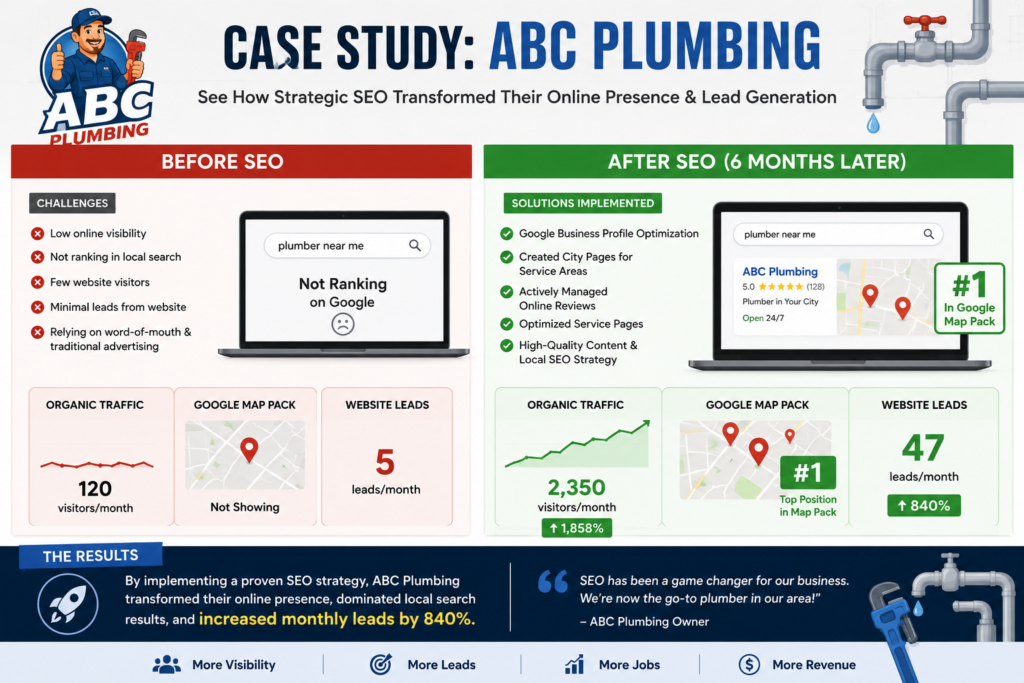
To illustrate the impact of effective SEO for plumbers, let’s look at a hypothetical example: ABC Plumbing. Before implementing a comprehensive SEO strategy, ABC Plumbing relied heavily on word-of-mouth and traditional advertising, generating an average of 5 leads per month from their website. Their online visibility was poor, and they rarely appeared in local search results.
After partnering with an agency specializing in the best seo for plumbers, ABC Plumbing underwent a complete digital overhaul.
The strategy focused on optimizing their Google Business Profile, creating dedicated city pages for their service areas, actively managing online reviews, and developing high-quality service pages.
Within six months, the results were dramatic. ABC Plumbing’s organic traffic surged, and they began dominating the local Map Pack. Most importantly, their lead generation skyrocketed to 47 leads per month.
This example demonstrates how a targeted plumbing SEO campaign can transform a business’s online presence and drive significant growth.
SEE OTER CASE STUDY
CLEAN CUT BARBER (CASE STUDY
FAQs
Q: What is the most important SEO factor for plumbers?
Local SEO, particularly optimizing your Google Business Profile, is often considered the most crucial factor for plumbers due to the localized nature of their services.
Q: How often should I update my Google Business Profile?
You should aim to update your Google Business Profile regularly, ideally weekly, with new posts and photos, and by responding to reviews and Q&A.
Q: Can I do plumbing SEO myself?
While basic SEO can be done in-house, achieving significant and sustained results in a competitive market often requires the expertise of an experienced SEO professional or agency.
Q: What are some key performance indicators (KPIs) for plumbing SEO?
Key KPIs include organic search rankings, website traffic, local pack rankings, number of phone calls from Google Business Profile, conversion rates, and return on investment (ROI).
Q: How important are reviews for plumbing SEO?
Reviews are extremely important. They not only influence your local search rankings but also build trust and credibility with potential customers, directly impacting conversion rates.
Conclusion
In conclusion, a well-executed SEO strategy is indispensable for any plumbing business aiming for sustainable growth in the digital age. By focusing on comprehensive keyword research, robust local SEO, technical optimization, engaging content marketing, and strategic link building, plumbing companies can significantly enhance their online visibility, attract high-quality leads, and ultimately drive more service calls. Investing in SEO is investing in the long-term success and profitability of your plumbing business.