
introduction
when the global real estate market is increasingly digitized, Artificial Intelligence is no longer just a buzzword it has become a practical business tool.
According to a report by McKinsey Global Institute (2023), AI adoption in the real estate sector has improved operational efficiency by 30 to 40 percent. These numbers and figures show that this is not just a technology craze, but a measurable business shift.
Now agents and investors no longer rely solely on their experience or gut feeling they are looking at property valuation, lead scoring, and market trend analysis in a data-driven manner through AI-powered tools.
According to a survey by the National Association of Realtors (NAR, 2024), 51 percent of real estate professionals already incorporate some form of AI into their workflow and that number is growing every year.
But the real question here is: does this investment really take your business forward, or is it just an expensive digital experiment? That’s the purpose of this article to clarify the difference between AI cost and its true value, so you can make an informed and confident decision.
Understanding the True Cost of AI in Real Estate
AI is reshaping real estate — but before you invest, it’s important to understand what you’re actually paying for. Costs aren’t just about the monthly subscription; they include setup, customization, training, and ongoing maintenance. Knowing the full picture helps you make smarter, budget-friendly decisions that truly serve your business .

AI Tool Subscription vs Custom Development
Ready-made AI subscriptions are affordable, fast to launch, and maintained by the vendor — great for most agents and small brokerages. Custom-built AI, on the other hand, is built specifically for your workflow, but comes with a much higher price tag and longer setup time. Think of subscriptions as renting a fully furnished apartment, and custom development as constructing your own home from scratch.
| Subscription(monthly) | Custom build(one time) | Setup time |
| $30 -$500+ | $5k-$100k+ | Day vs month |
One-Time vs Recurring Expenses
One-time costs include things like initial setup, data migration, staff training, and any custom integrations. Recurring costs are your monthly or annual fees for using the platform, plus ongoing support or upgrades. Many businesses underestimate recurring costs a tool that seems cheap at $49/month adds up to nearly $600/year, and that’s before add-ons or per-user fees.
| one time setup range | Annual recurring (avg) |
| $500k-$200k | $300-$6000 |
Popular AI Tools Pricing Overview
Here’s a snapshot of commonly used AI tools in real estate — covering CRMs, chatbots, and analytics platforms — along with their typical pricing tiers.
Follow Up Boss — CRM
AI-powered lead routing and follow-up automation for agents and teams.$69–$499/mo
Structurally – AI Chatbot
Conversational AI that qualifies real estate leads 24/7 via SMS and chat.$99–$499/mo
HouseCanary — Analytics
Predictive property analytics and AVM (automated valuation models) for investors.
Custom pricing
Lofty (formerly Chime) — CRM + AI
All-in-one platform with AI assistant, lead scoring, and smart drip campaigns.$299–$1,500/mo
Reonomy — Data & Analytics
Commercial real estate intelligence using AI to surface off-market opportunities.$49–$250/mo
Hidden Costs of AI Implementation
A Practical Guide for Decision-Makers & Business Leaders Whenever an organization plans to adopt AI, the first thing that’s discussed is technology costs—models, APIs, cloud infrastructure. But this is where a big mistake is made. In actual implementation, there are some costs that are not reflected in the budget and then delay the project. Today, we’ll explore precisely these hidden costs so you can plan your AI roadmap more wisely.
Data Cleaning and Data Preparation
This isn’t just a technical step, it’s an entire operation.Many organizations assume their data is ready for AI. The reality? Quite the opposite. According to industry estimates, data scientists spend 60 to 80 percent of their time solely on data cleaning and preparation—not on actual model building. This cost isn’t just money, but also time and human effort.Data scientists spend 60–80% of their time on data preparation tasks, not modeling.” CrowdFlower Data Science Report
Data cleaning includes the cost of these subtasks:
- Standardizing inconsistent formats (dates, phone numbers, addresses)
- Handling missing values—impute or remove?
- Data labeling and annotation (especially for supervised ML)
- Identifying and removing duplicate records
- Extracting and migrating data from legacy systems
Practical tip: Get your data audited first. Before engaging any AI vendor, assess your internal data quality. If the data is messy, the AI project may not even begin properly.
RESOURCES
Anaconda State of Data Science Report 2022
IBM Cost of Poor Data Quality study
CrowdFlower Data Science Report 2017
Staff Training and Onboarding Costs
The work doesn’t end with the introduction of technology—people start learning.
Implementing AI tools isn’t just about installing software. Your employees will need to understand how the new tool works, adapt their existing workflows, and—most importantly—learn to critically evaluate AI outputs. This is all a time- and resource-intensive process that often isn’t budgeted for.
“Organizations that invest in AI training programs see 30% higher adoption rates and 25% better ROI from their AI initiatives.” — McKinsey Global AI Survey 2023.
Staff training costs generally fall into these categorie
- Initial onboarding sessions , workshops, webinars, and hands-on training
- Lost productivity during the learning curve (employees slow down first)
- Specialized role-based training , different for managers, analysts, and IT staff
- Ongoing upskilling as AI tools are updated or evolved
- Hiring external consultants or trainers if there is no in-house expertise
A realistic estimate: A proper AI training program for a medium-sized organization (100–500 employees) can cost anywhere from $50,000 to $200,000 — completely separate from technology costs.
McKinsey Global Institute AI Report 2023
Gartner AI Training Cost Analysis 2022.
Change Management Challenges
The Biggest Cost—People Resistance and Cultural Shift
Honestly speaking, change management is the most underestimated and most expensive hidden cost of AI implementation. Technology is installed, but if people don’t trust it, reject it, or don’t adopt the process—the entire investment is wasted. Organizational psychology says that 70% of technology transformations fail due to people and culture issues, not technology.”70% of all change initiatives fail. The most common reason is not technology—it’s people.” — McKinsey & Company, Changing Change Management
Change management includes these hidden costs:
- Managing employee resistance—job security fears, AI phobia, workflow disruption
- Internal communication campaigns—why AI? What are the benefits? Convincing employees
- Engaging change management consultants (this is expensive)
- Process redesign — replacing old workflows with new AI-enabled workflows
- Pilot programs and feedback loops — iterative testing that consumes time
- Productivity dip during the transition period — a temporary but real cos
This cost isn’t just financial — it also impacts morale, retention, and long-term culture. Organizations that take change management seriously have significantly higher AI adoption success rates.
System Maintenance and Updates
AI is not something you can install and forget about. Many decision-makers think that once an AI system is deployed, it’s done. But this is a critical misconception. AI systems—especially machine learning models—require continuous maintenance, monitoring, and updates. Data drifts, regulations change, business requirements evolve. All of this translates to ongoing costs.The total cost of ownership for AI systems can be 3–5x the initial deployment cost when maintenance, monitoring, and retraining are factored in.” Forrester Research, AI Total Cost of Ownership 2023
Maintenance and update costs typically include:
- Model retraining—when real-world data changes, model accuracy declines; Retraining is expensive.
- Performance monitoring systems — dashboards, alerts, and dedicated staff
- Security patches and vulnerability management — AI systems are also vulnerable.
- Maintaining compatibility with vendor updates and API version changes.
- Compliance updates — adjustments to GDPR, the AI Act, or local regulation
- Technical debt — shortcuts taken early on become costly later.
Rule of thumb: Annual maintenance budget should be 15–25% of deployment cost. This isn’t just a best practice it’s a survival strategy. Without maintenance, an AI system can become outdated or inaccurate within months.Forrester Research — Deloitte State of AI in the Enterprise 2023.
Implementation Timeline & Deployment Strategy
This chapter walks you step-by-step through the complete AI journey — from basic tools to advanced AI systems, along with the practical challenges of CRM integration. Har stage ko is tarah design kiya gaya hai ke woh actionable ho, taake aap easily apni organization mein implement kar saken.
Basic Tools Setup (1–4 Weeks)
The first phase of an AI journey is all about building a strong foundation. At this stage, there is nothing overly complex— the focus is simply on setting up the basic tools that will support more advanced systems later on.During the first 1–2 weeks, the infrastructure is established. This includes configuring cloud accounts, generating API keys, and preparing the development environment. It is also the stage where organizations choose platforms like AWS or Azure.In weeks 2–3, organizations begin basic AI integrations, such as deploying simple chatbots or auto-reply systems. They also start testing basic prompting through APIs like OpenAI or Anthropic.By weeks 3–4, the focus shifts toward team onboarding. Staff are trained to use AI tools, often through hands-on workshops, which help reduce resistance and build confidence. At the same time, quality benchmarks are set on an ongoing basis. Metrics such as accuracy, response time, and user satisfaction are tracked to ensure performance remains measurable and improves over time.
Advanced AI Systems Deployment (1–6 Months)
This is the phase where “actual AI” implementation begins. After the basic setup, organizations deploy advancedsystems, such as predictive analytics, NLP pipelines, and automated decision-making tools. This phase is more complex, so a phased rollout and continuous iteration is considered the best approach [4].The first step in Months 1–2 is model selection and fine-tuning. Here, businesses select models appropriate for their use case—such as GPT-4, cloud or open-source options—and implement techniques such as fine-tuning or RAG, setup [5]. Predictive analytics is introduced during months 2–4, where customer behavior analysis, churn prediction, and sales forecasting models are deployed—but only when historical data is clean and reliable [6].Workflow automation begins in months 3–5, where AI handles repetitive tasks like lead scoring, email routing, and reporting. This is where organizations often start to see a clear ROI [4]. Finally, testing and validation occur during months 5–6—including A/B testing, bias detection, and edge case handling—so that the system is fully ready for production .
CRM & Workflow Integration Challenges
The most underestimated part of AI deployment is CRM integration. Many people think it’s simply “connecting,” but in reality, data silos, legacy systems, and organizational changes combine to make this process quite complex [8].The primary challenge is data quality and consistency. Most CRMs contain dirty data—such as duplicate contacts, missing fields, and inconsistent formats. AI systems only perform well on clean data, making data cleansing a crucial step [8]. Another issue is legacy system compatibility, as many organizations still use legacy systems like Salesforce Classic or on-premise CRMs, which require middleware or custom APIs to integrate with modern AI tools [9].Furthermore, data privacy and compliance are also a significant concern. Under regulations like GDPR or PDPA, using customer data in AI models is sensitive, requiring proper legal review [10]. User adoption resistance is also a barrier, as sales and support teams often perceive AI workflows as additional workload—which is addressed through effective change management strategies, such as training, incentives, and clear communication [3].The final challenge is real-time synchronization. AI models need updated data, and if there’s a delay between the CRM and the AI system, predictions become outdated—creating trust issues.
Scalable ROI Models for Different Business Sizes
The ROI (Return on Investment) of AI in real estate isn’t a fixed formula—it changes according to business size, resources, and goals. Therefore, a “one-size-fits-all” approach doesn’t work. Let’s explain it in a simple and practical way.
Solo Agents
If you’re a solo agent, your most valuable asset is your time—and that’s where the ROI of AI begins.
AI tools like CRM automation, chatbots, and lead scoring free you from repetitive tasks. Meaning, you can focus on closing high-value deals instead of cold calls and manual follow-ups.
Low Investment → High Efficiency
Monthly AI tools cost relatively little.
Productivity increases of up to 20–40% are possible.
In simple terms:
“More deals in less time = better ROI.”
Example: If a solo agent uses an AI chatbot that captures leads 24/7, missed opportunities are almost eliminated.
Chaffey, D. (2022). Digital Marketing: Strategy, Implementation and Practice – Automation improves individual productivity and lead conversion efficiency.
Small & Boutique Brokerages
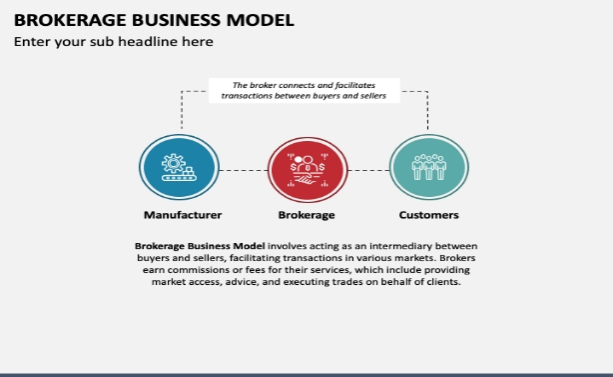
Now let’s talk about small teams (5–20 agents). Here, ROI depends on team performance, not just at the individual level.
AI’s role becomes a little more advanced here:
- Centralized CRM systems
- Team-wide lead distribution
- Performance analytics
Here, AI helps:
- Intelligently assign leads
- Identify best-performing agents
- Optimize marketing campaigns
Moderate investment → Scalable growth
ROI improves through better coordination and data-driven decisions
Meaning: “Right lead, right agent, right time”
Insight: Boutique brokerages can maximize their limited resources through AI—giving them an edge to compete with larger firms.
Davenport, T. H., & Ronanki, R. (2018). Artificial Intelligence for the Real World (Harvard Business Review) – AI enhances team productivity and decision-making in mid-sized organizations.
Large Real Estate Firms
The ROI of AI for large firms is the most complex—but also the most powerful. The focus is on scale, automation, and predictive intelligence.
AI use cases include:
- Predictive analytics for market trends
- Advanced customer segmentation
- Automated marketing at scale
- Enterprise-level CRM integration
- High investment → long-term exponential ROI
- Initial costs are higher (integration, training, infrastructure)
- but massive gains are realized in the long term.
- “Data-driven decisions = higher profitability + lower risk”
Large firms can use AI models to predict which areas will see increased property demand—leading to smarter investment decisions.
McKinsey Global Institute (2021). The State of AI – Large enterprises achieve the highest ROI through AI when scaled across multiple business functions.
Conclusion
If we summarize the entire discussion in simple terms, one thing is clear: AI is no longer a luxury in real estate—it has now become a necessity. But this doesn’t mean that every AI investment automatically becomes profitable.The reality is that the ROI of AI directly depends on smart planning, correct tool selection, and proper implementation. Initial costs such as software subscriptions, data cleaning, staff training, and system integration can seem a bit heavy. But when these systems are properly implemented, they increase operational efficiency, improve lead conversion, and make decision-making data-driven.For solo agents, AI is a time-saving engine, for small brokerages, it’s a growth accelerator, and for large firms, it’s a strategic advantage. This means that ROI isn’t just measured in money, but also in time, productivity, and a competitive edge.But one important thing to remember:Purchasing AI tools doesn’t deliver ROI—using them correctly does.Therefore, successful real estate professionals are those who don’t blindly follow AI, but rather align it with their business strategy.Davenport, T. H., & Ronanki, R. (2018). Artificial Intelligence for the Real World, Harvard Business Review.McKinsey Global Institute (2021). The State of AI.Chaffey, D. (2022). Digital Marketing: Strategy, Implementation and Practice.