
Introduction
Most real estate agents don’t struggle because of bad listings they struggle because they can’t keep up.
Leads come in late at night, follow-ups get delayed, and opportunities slip away. Meanwhile, a new wave of agents in 2026 is closing more deals, responding instantly, and scaling faster all with the help of AI.
AI is no longer a futuristic concept in real estate it’s a powerful advantage transforming how agents generate leads, communicate with clients, and close deals. From automating tasks to delivering personalized experiences, AI is changing the rules of the game.
In this guide, you’ll discover how AI is reshaping the real estate industry from intelligent lead generation and automated follow-ups to advanced market insights and property visualization. More importantly, you’ll learn how to actually use these tools to work smarter, save time, and stay ahead in an increasingly competitive market.
The Evolution of Real Estate in the AI Era
Real estate has historically been a relationship-driven industry,gg yet the integration of AI is not replacing the human element but rather enhancing it. As noted in the, Fortuner Hub 2026 AI Guide, AI tools are designed to manage repetitive tasks, allowing agents to dedicate more time to building crucial relationships and finalizing transactions. This shift enables professionals to strategically allocate their time, significantly boosting both productivity and profitability. For instance, AI can meticulously analyze buyer behavior, accurately predict property preferences, and recommend listings that are precisely tailored to individual clients. Such a degree of personalization was almost unimaginable just a few years ago, but as the StrategicAgent Future of Real Estate Report highlights, it is swiftly becoming the industry standard.
Key Benefits of AI Tools for Real Estate
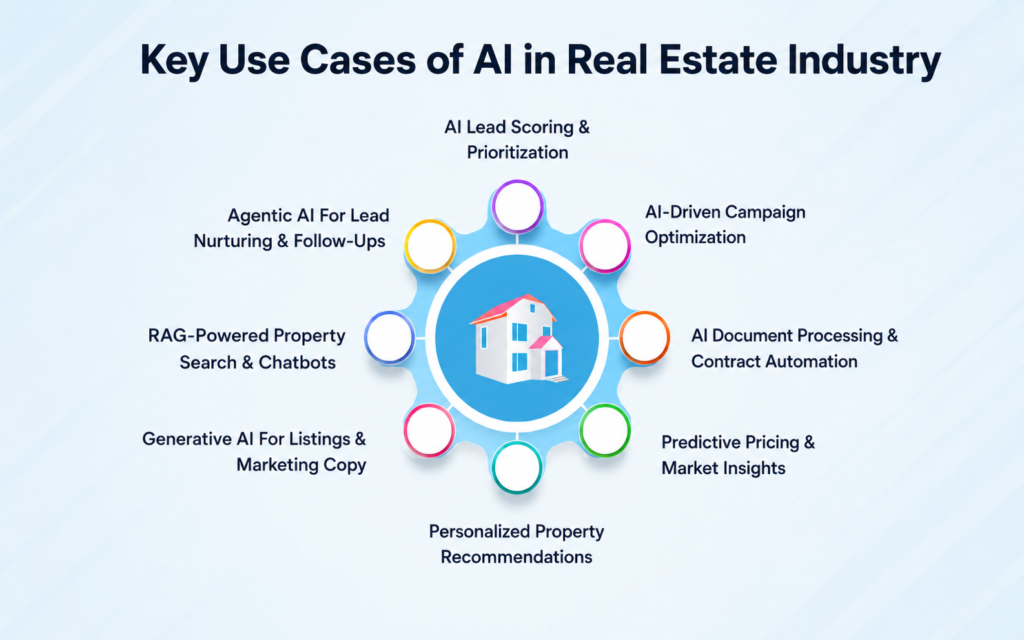
The widespread adoption of AI tools in real estate is driven by their tangible and measurable benefits. These tools offer more than just convenience; they deliver significant results across various aspects of the business, a point emphasized by industry experts at Fortuner Hub.
Time Savings
AI automates numerous repetitive tasks, including data entry, email responses, and appointment scheduling. This automation liberates valuable time for agents, allowing them to concentrate on high-impact activities that require human expertise and negotiation skills.
Improved Lead Conversion
With AI-driven insights, agents can effectively identify and prioritize high-quality leads. Automated follow-ups ensure that no potential client is overlooked, optimizing the conversion funnel.
Enhanced Marketing
AI tools can generate professional property descriptions, engaging social media posts, and targeted ad campaigns within minutes. This capability helps agents maintain a robust online presence and reach a wider audience efficiently.
Data-Driven Decisions
By analyzing vast amounts of market trends and client behavior data, AI provides actionable insights. These insights empower agents to make more informed and strategic decisions, leading to better outcomes.
24/7 Availability
AI-powered chatbots and virtual assistants ensure that client inquiries are addressed instantly, even outside of regular business hours. This constant availability significantly improves client satisfaction and responsiveness.
Top AI Tools Transforming Real Estate in 2026
In 2026, a diverse array of AI tools is available, each addressing different facets of the real estate business. These tools are proving to be highly impactful for agents, as detailed in recent comparisons by Perspective AI and Fortuner Hub.
Conversational Lead Intake & Buyer/Seller Qualification
This is arguably the most strategic AI lane for real estate agents. It involves replacing static contact forms with AI-driven interviews that capture crucial information such as motivation, timeline, financing, and the ‘why now’ factor. Perspective AI stands out in this category, purpose-built to conduct qualifying interviews at scale, follow up on vague answers, and generate structured profiles for agents to act upon swiftly. Their research shows that replacing forms with interviews can significantly increase lead quality.
Listing Copy & Description Generation
| Lane | Recommended #1 | Strong Alternatives | Best For |
| Conversational lead intake | Perspective AI | Structurely, Roof AI | Replacing forms with AI interviews |
Generating compelling listing descriptions used to be a time-consuming task. AI drafting tools now streamline this process, maintaining quality while significantly reducing the time required. While agents still review and adjust the tone, the foundational content is generated rapidly. Optimized content also boosts online discoverability, with strong descriptions and data signals increasing reach, a benefit highlighted by StrategicAgent. Listings AI is a recommended tool, specifically designed for MLS-compliant prose, avoiding common AI pitfalls like hallucinated features.
AI-Powered CRM Systems
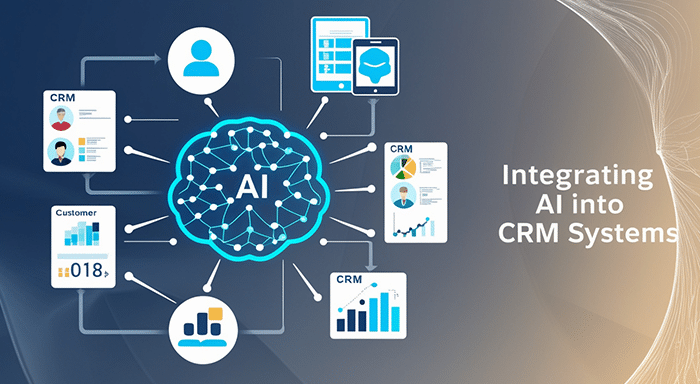
Customer Relationship Management (CRM) is vital in real estate, and AI has elevated its capabilities. Platforms like Follow Up Boss utilize AI to track leads, automate follow-ups, and provide insights into client behavior, helping agents stay organized and ensure timely communication. Similarly, kvCORE offers predictive analytics, enabling agents to identify potential buyers and sellers proactively, according to the Fortuner Hub analysis.
AI Sales Assistants
Engaging leads quickly is paramount, and AI sales assistants make this easier than ever. Structurely, for instance, acts as a 24/7 virtual assistant, interacting with leads via text and email. It qualifies prospects, answers questions, and even schedules appointments automatically, ensuring no opportunity is missed.
Marketing and Design Tools
Visual presentation is critical in real estate. Canva, with its AI features, has become a popular tool for creating professional marketing materials, from property flyers to social media posts. AI-driven platforms for virtual staging allow agents to transform empty spaces into beautifully furnished homes, helping buyers visualize potential and reducing logistical delays associated with physical staging, as noted in the Strategic Agent Guide.
Workflow Automation Platforms
Efficiency is a cornerstone of success, and workflow automation tools help agents streamline operations. Platforms like Make.com connect various applications and automate processes such as lead capture, follow-ups, and notifications. This reduces manual effort and ensures seamless coordination across tasks.
AI-Powered Property Search, Listings, and Marketing
AI significantly influences how properties are searched, listed, and marketed. Algorithms analyze browsing patterns to deliver personalized listing suggestions, enhancing client retention, according to StrategicAgent’s 2026 Forecast.
Visualization and Immersive Experience Tools
Visuals set expectations even before a buyer steps into a property. Virtual staging and image enhancement tools, often AI-powered, digitally furnish empty rooms and enhance property photos, capturing attention and creating an emotional connection early on. Furthermore, 3D tours and immersive visualizations allow for deeper exploration remotely, ensuring buyers are informed and motivated before physical visits, as detailed by StrategicAgent.
Pricing, Valuation, and Market Intelligence AI
AI provides robust support for pricing decisions through large-scale data analysis. Automated Valuation Models (AVMs) use machine learning to compare visual and numeric data points, providing faster property value assessments that complement an agent’s market knowledge. Predictive market analytics tools analyze historical patterns and geographical data to forecast shifts in demand or pricing, improving timing decisions and building client trust through data-backed strategies. HouseCanary and Zillow Premier Agent data are prominent in this lane, offering underwriting-grade analytics and buyer-side intent data, as highlighted in the Perspective AI Ranked Comparison.
AI Transaction & Document Workflow
While still evolving, AI in transaction coordination is showing significant promise. Tools like Dotloop, with its AI features, assist in addendum summarization, flagging missing signatures, and basic clause extraction. This helps agents manage the document-review aspect of transactions more efficiently, though the human element of client emotional management and vendor coordination remains crucial, according to the Perspective AI 2026 Review.
How AI Is Changing Client Expectations
As AI tools become more prevalent, client expectations are also evolving. Buyers and sellers now anticipate instant responses, highly personalized recommendations, and a seamless experience throughout the entire transaction process. AI empowers agents to meet these heightened expectations by providing real-time insights and automating communication. For example, chatbots can instantly answer common questions, while predictive analytics can suggest properties that perfectly match a buyer’s preferences. This level of responsiveness and personalization not only significantly improves client satisfaction but also fosters trust and loyalty, a trend observed in the Fortuner Hub Market Analysis.
Challenges and Considerations
Despite the undeniable benefits, the adoption of AI tools in real estate comes with its own set of challenges and considerations.
Learning Curve
Integrating new technology requires a commitment of time and effort. Agents must invest in training to fully leverage the capabilities of AI tools.
Data Privacy
Handling sensitive client data responsibly is paramount. Agents must ensure that their AI tools and practices comply with all relevant data protection regulations and ethical guidelines.
Over-Reliance on Automation
While AI excels at handling many tasks, the human touch remains an essential component in real estate. Building genuine relationships and understanding the emotional nuances of clients cannot be fully automated. Agents must strike a balance, using AI to augment their abilities rather than replace their personal involvement. By proactively addressing these challenges, agents can maximize the advantages of AI while preserving a personalized and human-centric approach to their business, as advised by the Tommaso Maria Ricci Implementation Guide.
The Future of AI Tools in Real Estate
The future of real estate is inextricably linked to artificial intelligence. As technology continues its rapid advancement, we can anticipate even more sophisticated AI tools that will offer deeper insights and greater levels of automation. Emerging trends include highly advanced AI-driven property valuation models, virtual reality tours further enhanced by AI, and predictive analytics that can anticipate complex market shifts with remarkable accuracy. These innovations are set to further streamline operations and significantly improve decision-making capabilities for agents. Moreover, AI will continue to elevate the client experience by providing even more precise recommendations and faster, more efficient service. Agents who proactively embrace these technological advancements will be exceptionally well-positioned to thrive in an increasingly competitive market, a conclusion shared by the experts at Fortuner Hub and StrategicAgent.
Conclusion
In 2026, success in the real estate industry is no longer solely about hard work; it is fundamentally about smart work. AI agents and their sophisticated tools are profoundly transforming the industry by automating routine tasks, dramatically improving efficiency, and delivering superior client experiences. From intelligent content creation and streamlined lead management to advanced marketing strategies and comprehensive workflow automation, these tools are fundamentally reshaping how real estate professionals operate. By seamlessly integrating AI tools into their daily workflows, agents can reclaim valuable time, significantly boost their productivity, and ultimately close more deals. As the industry continues its dynamic evolution, one truth remains abundantly clear: those who enthusiastically embrace AI will undoubtedly lead the future of real estate, while those who resist this inevitable technological tide risk being left behind in an ever-advancing landscape. This shift is not just a trend but a fundamental change in the business model, as documented by leaders in the field like Perspective AI, Fortuner Hub, and StrategicAgent.