
Introduction
AI automation is transforming industries, but its success rests on a strong foundation of data privacy, security, and compliance. As AI systems process large volumes of sensitive data, organizations must implement strict frameworks to mitigate emerging risks.
Data privacy ensures that user data is handled confidentially, maintaining its confidentiality and personal control. Security in AI pipelines protects against high-value threats, such as data poisoning or adversarial attacks
. Compliance guarantees that everything is operating in accordance with global regulatory standards such as GDPR and CCPA. According to Gartner, by 2026,
organizations that properly operationalize AI transparency, trust, and security will see up to a 50% increase in their adoption rates and business goals. Balancing rapidly increasing innovation with strict data governance is no longer just a legal requirement .
It’s a vital way to maintain digital trust and long-term competitive advantage.
Why Data Security Matters in AI Systems
There are simple and nuanced ways to understand why data security is important in AI systems. AI models (like ChatGPT, Gemini, or a company’s internal bots) are different from ordinary software. They train on very small data. If that data is not secure, everything can go wrong.
Here are the key reasons why data security matters so much in AI:
Data Privacy and Confidentiality
Sensitive data is often used to train AI systems, such as people’s medical records, bank details, or company secret documents.Danger: If the AI isn’t secure, someone could extract confidential data from the AI through user chats (called prompt injection or data leakage).Example: A doctor is consulting an AI, and it accidentally leaks the name and illness of a previous patient.
Data Poisoning (Misleading the AI)
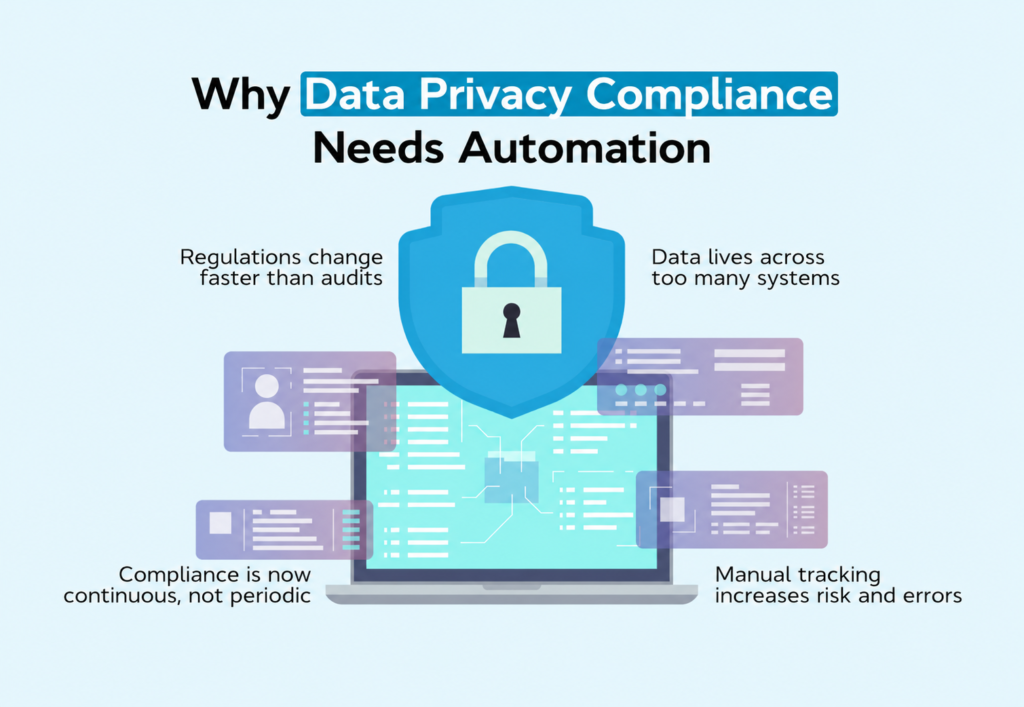
The AI learns only what you teach it. If security is weak and a hacker inserts false or harmful information into the training data, the AI will go berserk. Danger: This is called data poisoning. This can lead to AI making incorrect decisions, which can be very dangerous (e.g., a self-driving car mistaking a red light for green).
Compliance and Legal Issues (GDPR / Regulations)
These days, there are strict laws around data around the world, such as Europe’s GDPR. If your company’s AI leaks user data, you could face a fine of crores of rupees, and even the company could be shut down.
Intellectual Property (IP) Protection
Companies feed millions of their business data to AI to improve it (such as the formula for a new drug or new software code).If the AI system is not secure, competitors or hackers can steal that valuable code or formula.
Trust
People will never trust an AI that leaks their information or data. Once public trust is broken, the product flops.
Key Data Privacy Challenges in AI Automation
Navigating data privacy in AI automation is a major balancing act. While AI agents automate workflows and speed up operations, they create two critical privacy hurdles under modern compliance frameworks.
The Challenge of Erasure (The Right to be Forgotten)
Under regulations like the GDPR, individuals have a right to have their data deleted. The Problem: Traditional databases are easy to purge, but once data is fed into an AI model, it becomes woven into the system’s neural parameters.The Risk: You cannot easily “unlearn” specific data points. Completely retraining a model to delete one person’s information is incredibly expensive, leaving companies vulnerable to non-compliance fines.
The Black Box & Consent Problem
AI automation frequently chains multiple third-party tools together, creating a complex, opaque data trail. The Problem: It is incredibly difficult to track exactly how data is being shared or why an automated AI agent made a specific decision. Traditional user consent breaks down when AI repurposes data for secondary, unintended training. The Risk: Strict frameworks—like the EU AI Act—mandate clear audit trails and algorithmic transparency for automated decisions. Without explicit consent tracking across your entire automated pipeline, the risk of illegal processing skyrockets.
| Privacy challenge | Regulatory drive | Mitigation stratgey |
| Model data retention | GDRP | Differential privacy |
| Workflow opacity | EU AI / State laws | Continuous vendor tracking |
The Takeaway: To automate safely, organizations must adopt Privacy by Design—ensuring data tracking and deletion capabilities are built into the AI pipeline from day one, rather than treated as an afterthought.
Understanding Compliance & Regulations GDPR, CCPA, etc.
Data Compliance and Regulations simply means: “Protecting people’s data (information) on the Internet and using it according to their wishes.”When a user visits a website or app, their name, email address, location, and browsing history are tracked. Governments around the world have established regulations to prevent companies from misusing this data. If companies fail to comply, they face heavy fines.
GDPR (Europe)
- Basic Rule: Data cannot be collected without the user’s consent.
- User Rights: Users can have their data deleted at any time (“Right to be Forgotten”).
- Penalties: Breaking these rules carries a hefty fine (sometimes millions of euros).
CCPA (California, USA)
Basic Rule: Prohibits the sale of data.
User Rights: Websites must have a “Do Not Sell My Info” button so users can prevent their data from being sold.
Why is Compliance Important?
If you are running a website or app on the internet and your users are from Europe or America, then you are required to put a Privacy Policy and Cookie Banner on your website, no matter which country you are in.
Best Practices for Ensuring Data Privacy & Security
Here are two fundamental best practices for keeping data safe and private, broken down into the key details you need to know
Implement the Principle of Least Privilege (PoLP)
This is all about restricting access. Employees and software applications should only have access to the specific data necessary to do their jobs nothing more.Why it matters: If an account gets hacked or a disgruntled employee goes rogue, the damage is automatically contained. It prevents a minor breach from turning into a total system compromise.How to do it: Use Role-Based Access Control (RBAC) to automatically assign permissions based on job titles, and regularly audit these permissions to remove access that is no longer needed.
Encrypt Data Everywhere (At Rest & In Transit)
Encryption scrambles your data into unreadable code. Even if hackers manage to bypass your perimeter defenses and steal the data, they won’t be able to read it without the decryption keys.Data in Transit: Data moving across the internet (like a user filling out a form). Protect this using secure protocols like HTTPS and TLS.Data at Rest: Data sitting on hard drives, databases, or cloud storage. Protect this using strong encryption standards like AES-256.
Role of Ethical AI in Data Protection
Ethical AI plays a vital role in data protection. It ensures that when AI systems process personal information, it is done in a manner consistent with responsibility, justice, and the law. Ethical AI doesn’t just ask, “Can we use this data?” but rather, “Should we use this data, and what impact will it have on this person?”
Here’s a high-level breakdown of how these two work together:
- Privacy by Design: Integrating data protection into the AI’s code from day one, rather than fixing security flaws later.
- Preventing Bias: Ensuring that the AI doesn’t use personal data to unfairly target people (such as in hiring algorithms or loan approvals).
- Transparency: Explaining clearly to people why their data is being collected and how the AI analyzes it.
- Anonymization and Minimization: Using as little personal data as possible to train AI models, and often scrambling names and identities to protect one’s identity.
Risk Management & Mitigation Strategies
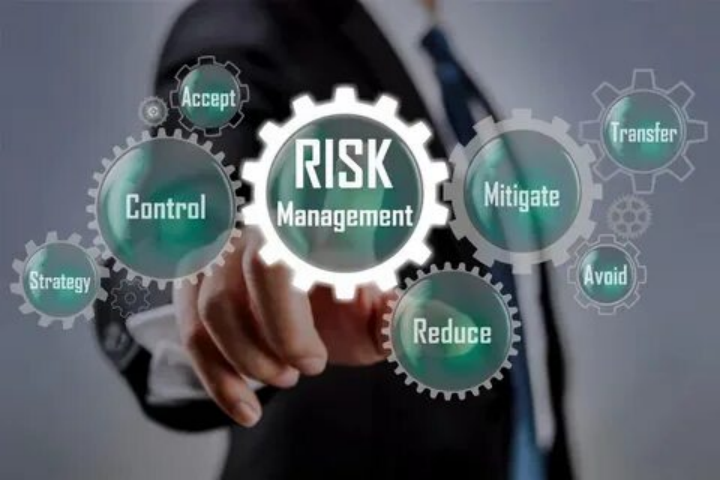
Risk management simply means: predicting what could go wrong, assessing the potential damage, and developing a plan to avoid or mitigate it.
Here’s a simple and short breakdown:
Think of these as your strategic options:
Avoid (Eliminate it): Change your plans completely so the risk is no longer a threat.
Example: If an outdoor event faces a 90% chance of rain, you move the entire event indoors. The risk of getting wet is now 0%.
Mitigate (Reduce it): You can’t stop the risk from existing, but you can lower the chances of it happening or minimize the damage if it does.
Example: Wearing a seatbelt. It won’t prevent a car accident, but it drastically reduces the risk of serious injury.
Transfer (Share it): Shift the financial or operational burden of the risk to someone else.
Example: Buying insurance or hiring a specialized subcontractor to handle a highly technical, risky part of a project.
Accept (Live with it): Sometimes, a risk is so small, or the cost to fix it is so high, that it makes more sense to just take the hit if it happens.
Example: A minor budget overrun of $50 on a $10,000 project. You just keep a small cash reserve (contingency fund) ready.
Future of Data Privacy in AI Automation
As artificial intelligence (AI) and automation systems become more deeply integrated into daily operations, traditional methods of data protection (like simple firewalls or static encryption) are no longer enough. Because AI continuously learns from, processes, and adapts to vast amounts of user data, the future of data privacy is shifting toward smarter, automated, and proactive defense mechanisms. The future of data privacy in AI automation relies on 7 core pillars:
Privacy-Enhancing Technologies (PETs)
Traditional data encryption only protects data when it is stored or sent. The future relies heavily on advanced PETs like Homomorphic Encryption (which allows AI to analyze and run automated workflows on data while it remains fully encrypted) and Differential Privacy (which adds mathematical “noise” to datasets so individual identities cannot be reverse-engineered).
Federated Learning (Decentralized AI)
Instead of gathering massive amounts of sensitive user data into a central cloud server, which creates a massive target for hackers, the future is moving toward federated learning. AI models will be automated to train locally on decentralized individual devices (like smartphones or local company servers) and only send anonymous algorithmic updates back to the main system.
Shift from Manual Compliance to “Smart” Automation
Because the volume of digital data is too massive for humans to monitor manually, AI is being used to protect privacy. Automated AI compliance tools continuously scan workflows to automatically detect security anomalies, flag data leaks, mask sensitive fields (like social security or credit card numbers), and predict breaches before they occur.
AI and the “Right to be Forgotten
Global privacy regulations like GDPR give individuals the right to request that their data be deleted. However, making an AI model “unlearn” or forget specific personal data it was trained on is incredibly complex. The future will force automation pipelines to include structured data-deletion mechanisms that can surgically erase an individual’s data footprint from a machine learning model without breaking the system.
Combatting Synthetic Data and Re-Identification Risks
AI is highly skilled at connecting dots. It can take multiple pieces of “anonymous” or separate public data points and use automated pattern recognition to perfectly re-identify an individual. Future data privacy frameworks will focus heavily on strict audits of how automated systems combine datasets to prevent unintended behavioral profiling.
Transparency and Glass Box” AI Governance
Many advanced AI models operate as a “black box,” where even the developers don’t fully understand how a decision was automated. Future regulatory frameworks (like the EU AI Act) mandate algorithmic transparency. Automation tools must provide clear, explainable logic regarding how data was utilized to reach an outcome, especially in high-stakes fields like healthcare, hiring, and finance.
Zero-Trust API & Vendor Security
Because most leaks happen through third-party connections, the future relies on automated “zero-trust” pipelines. This ensures external AI tools and APIs cannot secretly store or use your data to train their own public models.
Conclusion
According to the author, Artificial Intelligence (AI) has made our lives and business work much easier and faster, but the core of this technology is that profit is possible only when user data is secure. If the data itself is stolen or falls into the wrong hands, then that technology can cause greater harm than benefit. It’s not just law, it’s a matter of trust: laws around the world (such as Europe’s GDPR or America’s CCPA) require companies to force users to hide data and not use it without permission. But this is not just the name of avoiding fines, but it is the only way to win the trust and confidence of the users. AI’s unique changes and challenges: AI is not like normal software. The data that is given to it to teach it becomes a part of its brain (Neural Parameters). That is why deleting a user’s data automatically (Right to be Forgotten) or finding out why a user made a decision (Black Box Issue), is a big challenge to be solved. Firing is mandatory for companies. Future Strategy (Privacy by Design): Gone is the time when you would build an AI system first and think about security later. To be successful in the future, companies will need to make security and privacy part of the system code from day one (i.e., locking data everywhere). Encrypting and granting access only as needed. Last thing, AI is like a powerful vehicle, and data security is its brake. No matter how fast and new a car is, without brakes, it will only cause accidents. A secure digital future is possible not just by creating technology, but by using it responsibly and ethically.