
Nowadays, AI technology is transforming every industry, and real estate is no exception. For real estate agents, AI has become a powerful tool that is making daily tasks, marketing, and client management much easier.
If you are a real estate agent, you probably have these questions in mind:
How is AI used in the real estate business?
How does AI improve lead generation?
Can AI automate client communication?
What role does AI play in property listings and marketing content?
What is the best way to use AI to grow a real estate business?
In this blog, we will go step by step and understand how a real estate agent can practically use AI to grow their business.
What is AI in real estate?
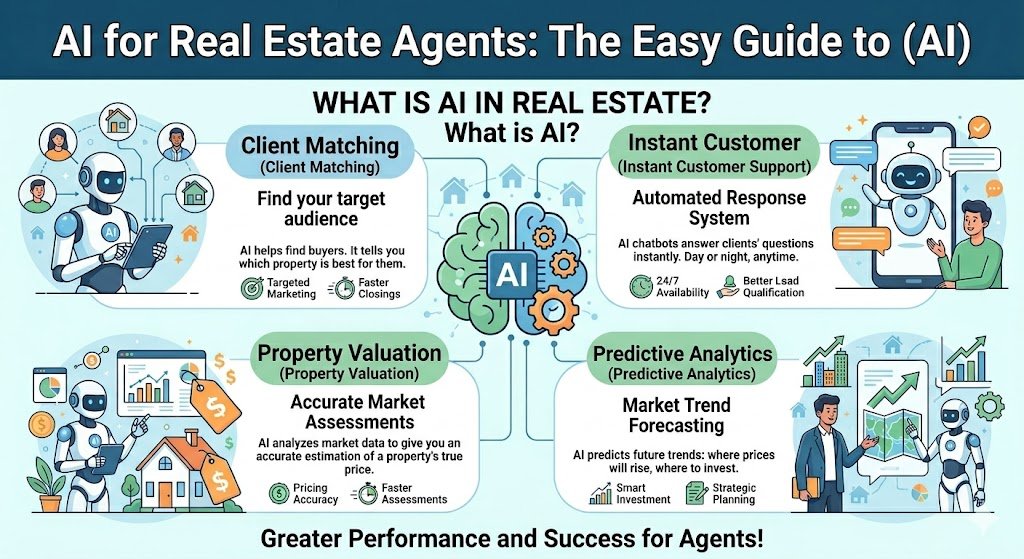
“Before understanding AI in real estate, it’s important to first understand what AI actually is.
Artificial Intelligence is a technology that gives machines and software the ability to:
- understand data,
- identify patterns,
- make predictions,
- provide recommendations,
- and perform certain repetitive or decision-based tasks in a human-like way.
In the context of real estate, AI means:
- analyzing property data,
- understanding customer behavior,
- predicting future trends,
- and optimizing sales, marketing, and management tasks.
Traditionally, real estate has been an industry where many tasks were done manually: showing properties to clients, comparing prices, managing leads, verifying documents, understanding market trends, and handling follow-ups. AI improves all of these processes.
Instead of relying only on guesswork, experience, or manual research, AI analyzes data and tells you which areas are seeing rising property demand, which type of property should be recommended to which client, which listings are overpriced, and which marketing strategies are most effective.
Benefits of Using AI for Real Estate Agents
In today’s real estate market, hard work alone is no longer enough; speed, consistency, personalization, and smart decision-making have become just as important. That’s why AI is emerging as a powerful support system for real estate agents.
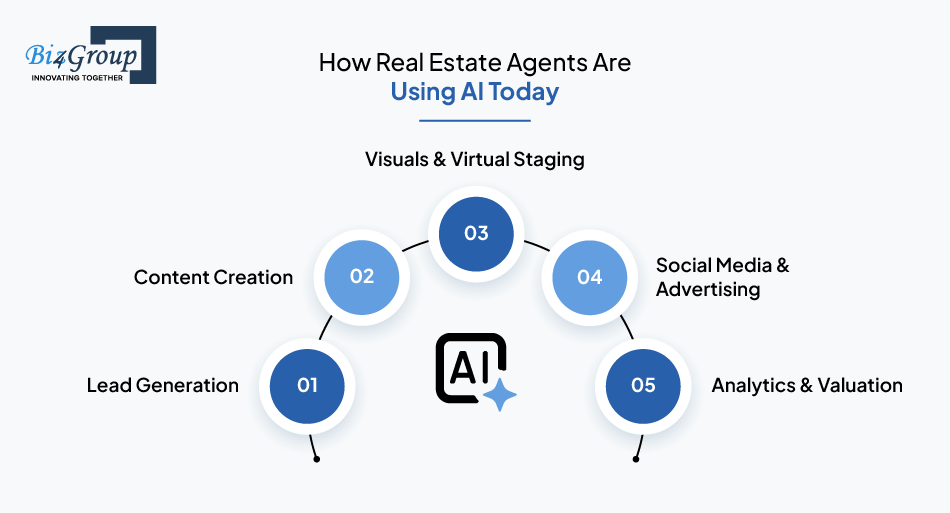
The biggest advantage of AI is that it automates, optimizes, and accelerates daily tasks. What used to take a lot of time—finding leads, writing listings, following up with clients, and managing marketing—can now be done much faster and in a more structured way. Below, we’ll look at the five major areas where AI provides the most value for real estate agents.
1- Faster Lead Generation
The foundation of any real estate business is leads. Without quality leads, the sales pipeline becomes weak. AI speeds up lead generation by analyzing buyer behavior, search intent, and audience patterns to reach more relevant prospects.
For example,
AI can track website visitor behavior and identify who is genuinely interested in property versus who is just casually browsing.
Similarly, AI can improve Facebook and Google ad targeting, reducing wasted ad spend and increasing qualified inquiries.
AI chatbots also capture inquiries 24/7, collect budget and location preferences, and deliver organized leads directly to the agent.
Mini case example:
For instance, a local property consultant added an AI chatbot to their website that asked visitors about budget, area, and property type. Earlier, they were getting only 5–6 random inquiries per day. After implementing the chatbot and AI-based ad targeting, they started receiving 12–15 more qualified leads from the same traffic. The difference was that the inquiries were no longer generic—they were filtered and more relevant.
2- Better Property Listing Writing
The quality of a property listing directly affects whether a buyer stays interested or skips it. Many agents have good properties but weak listing descriptions—either too generic or not highlighting key features properly. AI solves this problem by turning raw property details into polished, attractive, and easy-to-read listings.
The agent simply provides details like size, bedrooms, location advantages, renovation status, and nearby facilities, and AI converts them into a customer-friendly description. This not only makes listings more professional but also allows different tones for different types of properties, such as family homes, luxury houses, or investment properties.
Mini case example:
An agent had an 8-marla corner house listing that received no response for three weeks. They used AI to rewrite the description, highlighting “corner location,” “family-friendly layout,” “nearby market access,” and “ready-to-move condition” in a more appealing way. After improving the description, inquiries increased noticeably because buyers could now clearly understand the property’s value.
3. Automated Client Communication
In real estate, follow-ups and communication are critical—but also highly time-consuming. Responding to every client, following up with old leads, sharing property details, and confirming site visits can mentally exhaust an agent. AI helps by automating and standardizing communication. It can generate instant WhatsApp replies, write email follow-ups, create re-engagement messages for old leads, and even prepare personalized responses based on buyer requirements. This reduces response time and makes clients feel their inquiry is being handled seriously.
Mini case example:
A solo real estate agent was receiving so many leads that they couldn’t reply to everyone on time. They started using AI for first-response templates and follow-up drafts. Now, whenever someone asks about a “5-marla house in DHA,” AI generates a professional reply along with qualification questions. As a result, response time improved, and many leads that would have gone cold stayed engaged in conversation.
4. Smarter Marketing Campaigns
Without marketing, a real estate business cannot grow—but effective marketing is not easy for every agent. Social media posts, ad copy, campaign ideas, and audience targeting all require strategy. AI makes this process smarter by suggesting different marketing angles based on buyer personas.
For example, it can create ROI-focused ad copy for investors, safety and school-access messaging for families, and premium lifestyle content for luxury buyers. AI can also analyze past campaign performance and suggest future content ideas, helping agents move from random posting to intentional marketing.
Mini case example:
An agency created three different ad versions for the same apartment project using AI: one for investors, one for families, and one for overseas Pakistanis. The campaign results showed that the family-focused ad generated the highest quality leads. Without AI, this insight might never have been discovered.
5. Time Saving & Productivity Boost
The most practical benefit of AI is time-saving. A real estate agent’s day is not only about selling—it also involves admin work, writing, follow-ups, sorting leads, and planning. AI speeds up these repetitive tasks, freeing agents to focus on high-value activities like client meetings, negotiations, site visits, and relationship building. For example, AI can summarize site visit notes, organize client requirements, shortlist relevant listings, and even draft social media posts. This means an agent who previously managed 4 tasks in 8 hours can now handle 8–10 tasks in the same time.
Mini case example:
An independent property dealer used to spend 2–3 hours every night updating WhatsApp follow-ups, listing texts, and client notes. After using AI for listing descriptions, follow-up drafts, and lead summaries, their daily admin workload significantly reduced. The saved time was redirected toward client meetings and closing deals, which directly increased revenue.
How to Use AI as a Real Estate Agent (Step-by-Step Guide)
In today’s rapidly evolving real estate landscape, artificial intelligence (AI) is no longer a futuristic concept but a practical tool that can significantly enhance an agent’s efficiency, client engagement, and market understanding. This guide provides a step-by-step approach for real estate professionals to effectively integrate AI into their daily operations, ensuring a competitive edge and superior service delivery. We will explore various AI applications, from generating compelling property listings to predicting market trends, all designed to be accessible and beneficial for the modern real estate audience.
Step 1 – Generate Property Listings with AI
Crafting engaging and informative property listings is crucial for attracting potential buyers. AI-powered writing tools, such as ChatGPT, can streamline this process, allowing agents to generate high-quality descriptions quickly and efficiently. These tools can adapt to various tones and styles, ensuring each listing resonates with its target audience and highlights the property’s unique selling points.
How to Use ChatGPT for Writing Listings:
1.Provide Key Details: Start by feeding the AI essential information about the property, including its address, number of bedrooms/bathrooms, square footage, unique features (e.g., renovated kitchen, large backyard), neighborhood highlights, and target buyer demographic.
2.Specify Tone and Length: Instruct the AI on the desired tone (e.g., luxurious, family-friendly, modern) and the preferred length of the description.
3.Request Specific Angles: Ask the AI to focus on particular aspects, such as investment potential, lifestyle benefits, or architectural style.
Example Prompt:
“Write a compelling, luxurious property listing description for a 4-bedroom, 3-bathroom house located at 123 Main Street. Highlight its newly renovated gourmet kitchen, spacious master suite with a spa-like bathroom, and a beautifully landscaped backyard perfect for entertaining. The neighborhood is known for its top-rated schools and vibrant community. Target affluent families. The description should be approximately 250 words.”
AI tools like Write.homes also specialize in generating property descriptions, blog posts, and marketing materials, often with SEO optimization features to improve visibility
Step 2 – Automate Lead Generation
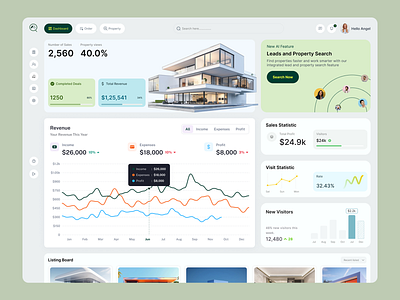
Lead generation is the lifeblood of any real estate business. AI can revolutionize this process by identifying potential buyers and sellers, nurturing leads, and integrating seamlessly with Customer Relationship Management (CRM) systems. AI tools can analyze vast amounts of data to pinpoint individuals most likely to transact, allowing agents to focus their efforts on high-potential prospects .
AI Tools for Finding Buyers/Sellers:
•Predictive Analytics: AI algorithms can analyze demographic data, online behavior, and market trends to predict who is likely to buy or sell in the near future. Tools like Lofty use predictive analytics to rank existing databases by transaction probability .
•Lead Scoring: AI can score leads based on their engagement levels (e.g., email opens, website visits, saved searches), helping agents prioritize follow-ups. MoxiWorks’ RISE platform, for instance, helps agents know who to call, what to send, and when to act .
•Chatbots: AI-powered chatbots on websites can engage visitors 24/7, answer initial questions, collect contact information, and capture intent signals, ensuring no lead is missed, even after hours .
CRM + AI Integration:
Integrating AI with CRM systems creates a powerful synergy. CRMs like CINC, Top Producer, and Wise Agent leverage AI for lead scoring, automated follow-up campaigns, and personalized property recommendations, streamlining the entire lead management process . This integration ensures that lead data is continuously updated and actionable, allowing for more strategic outreach.
Step 3 – Create Marketing Content
Effective marketing is essential for reaching a broad audience and showcasing properties. AI can assist real estate agents in generating diverse marketing content, from social media posts to email campaigns, ensuring consistency and relevance across all platforms.
Social Media Posts:
AI tools can generate engaging captions, hashtags, and even visual ideas for platforms like Facebook, Instagram, and X (formerly Twitter). By analyzing current trends and audience preferences, AI helps create content that captures attention and drives engagement.
Facebook Ads:
AI can optimize Facebook ad copy and targeting. By inputting property details and desired audience demographics, AI can suggest ad variations that are more likely to convert. Generative AI can also build suburb-specific visuals and campaigns to pair with localized copy .
Email Campaigns:
For email marketing, AI can draft personalized subject lines, body content, and calls to action. This personalization increases open rates and click-through rates, leading to better lead nurturing. AI can also help create seasonal campaigns, providing timely reasons to reconnect with leads .
Tools like Styldod’s AI Marketing Hub offer comprehensive solutions for AI-generated property descriptions, marketing copy, and automated social media content creation .

Step 4 – Improve Client Communication
Maintaining excellent client communication is paramount in real estate. AI tools can enhance responsiveness and personalization, ensuring clients feel valued and informed throughout their journey.
Auto Replies:
AI-powered auto-reply systems can instantly respond to common inquiries via email or messaging apps, providing immediate information and setting expectations. This frees up agents to focus on more complex client interactions.
Chatbots:
Beyond lead generation, chatbots can serve existing clients by answering frequently asked questions about properties, scheduling viewings, or providing updates. This 24/7 availability significantly improves client satisfaction.
WhatsApp Automation:
AI can automate responses and send personalized messages on platforms like WhatsApp, which is widely used for direct client communication. This can include sending new listing alerts, price updates, or reminders for appointments. While specific WhatsApp automation tools were not detailed in the initial research, the principles of AI-driven communication apply, allowing for tailored and timely interactions.
Tools like Sidekick act as AI-powered virtual assistants, managing email and text messages, automating follow-ups, and scheduling appointments, all while integrating with CRMs . Retell AI and Structurely offer AI voice agents that can handle inbound and outbound calls with human-quality conversations, further enhancing communication .

Step 5 – Analyze Property Trends
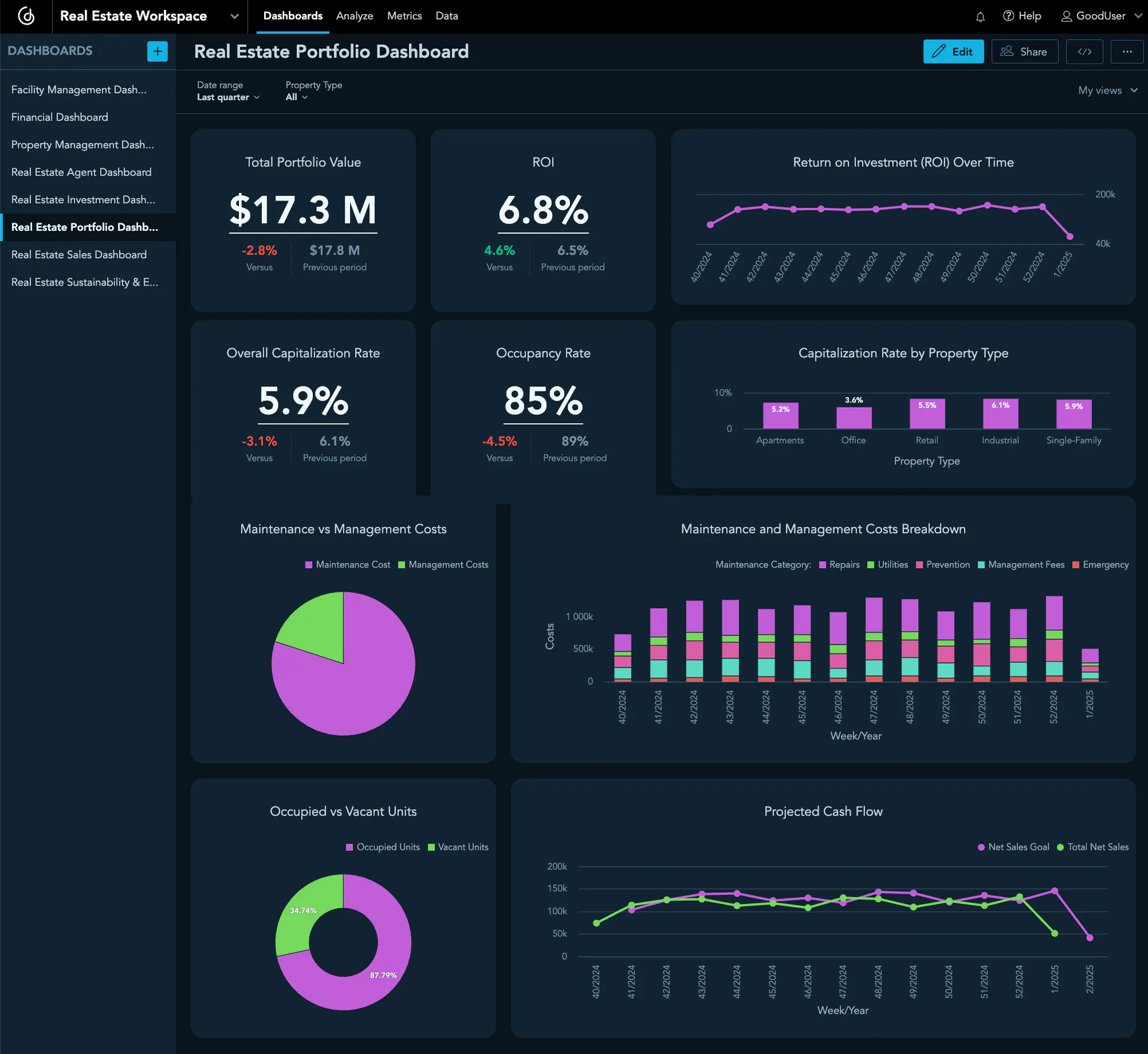
Understanding market dynamics is critical for making informed decisions and advising clients effectively. AI excels at analyzing vast datasets to provide insights into property valuations, market predictions, and emerging trends.
AI for Pricing Insights:
AI algorithms can process historical sales data, property characteristics, and economic indicators to provide highly accurate property valuations. This helps agents price listings competitively and advise buyers on fair offers. Saleswise, for example, offers AI-driven Comparative Market Analyses (CMAs) .
Market Prediction Tools:
AI can forecast future market movements by identifying patterns in supply and demand, interest rates, and local development plans. This predictive capability allows agents to anticipate shifts, identify investment opportunities, and guide clients toward profitable decisions. Predictive analytics in real estate uses AI algorithms to derive insights and forecasts from business data .
Tools like HouseCanary’s CanaryAI offer platforms for accurate property valuations and predictive analytics . Deal Machine’s Alma uses AI for property identification and analysis, including deal analysis and ROI calculations for investment opportunities .
Conclusion
AI is transforming the real estate industry, offering agents powerful tools to enhance every aspect of their work. By embracing AI for listing generation, lead automation, marketing content creation, client communication, and market analysis, real estate professionals can significantly boost their efficiency, improve client satisfaction, and gain a substantial competitive advantage. The key is to integrate these tools strategically, leveraging AI as a support system that amplifies human expertise and personal touch.